



Guides for you
Wallpaper or Paint? What's Better for the Walls in a Child's Room?
Decorating a child's room is full of challenges. One of the harder choices parents face is this decision: Is it better to paint the walls or go for wallpaper for a child's room? Both options have pros and cons, so it's worth weighing them carefully before making a final decision. In this post, we'll analyze both options to help you choose the best solution for your little one's room.
Paint – a classic solution with plenty of possibilities
The most popular types of paint for a kids' room
- Latex paints – they're among the most popular paints for kids' rooms. Why? Above all, they're highly washable. This means that even if your child decides to treat the wall as their own art gallery, you can easily remove any artistic feats. Latex forms a durable coating that's easy to clean.
- Acrylic paints – they offer a much richer color palette than latex paints, allowing for truly original designs. Unfortunately, they're less scrub-resistant than latex paints, so they need gentler treatment.
- Ceramic paints – a relatively modern option that combines the advantages of latex and acrylic paints. They're extremely resistant to stains and mechanical damage, yet very easy to clean. It's the perfect solution for a child's room, where durable walls are key.
Why is paint a good choice? The advantages of painting walls
- Easy application – painting walls doesn't require special tools or skills – a roller, a brush and a little patience are enough. What's more, most paints dry relatively quickly, so you can finish the renovation fast and introduce new designs. This way, you can refresh a child's room even in a short time.
- A wide range of colors – paints come in an almost endless number of colors and shades, which matters when choosing paint to suit individual preferences. Mixing paints lets you create unique colors tailored to your taste.
- Easy to change the look – what your little one loves today may no longer appeal in a few years. Fortunately, repainting walls is relatively easy and inexpensive. This way, you can easily adapt the room to your child's changing needs and tastes.
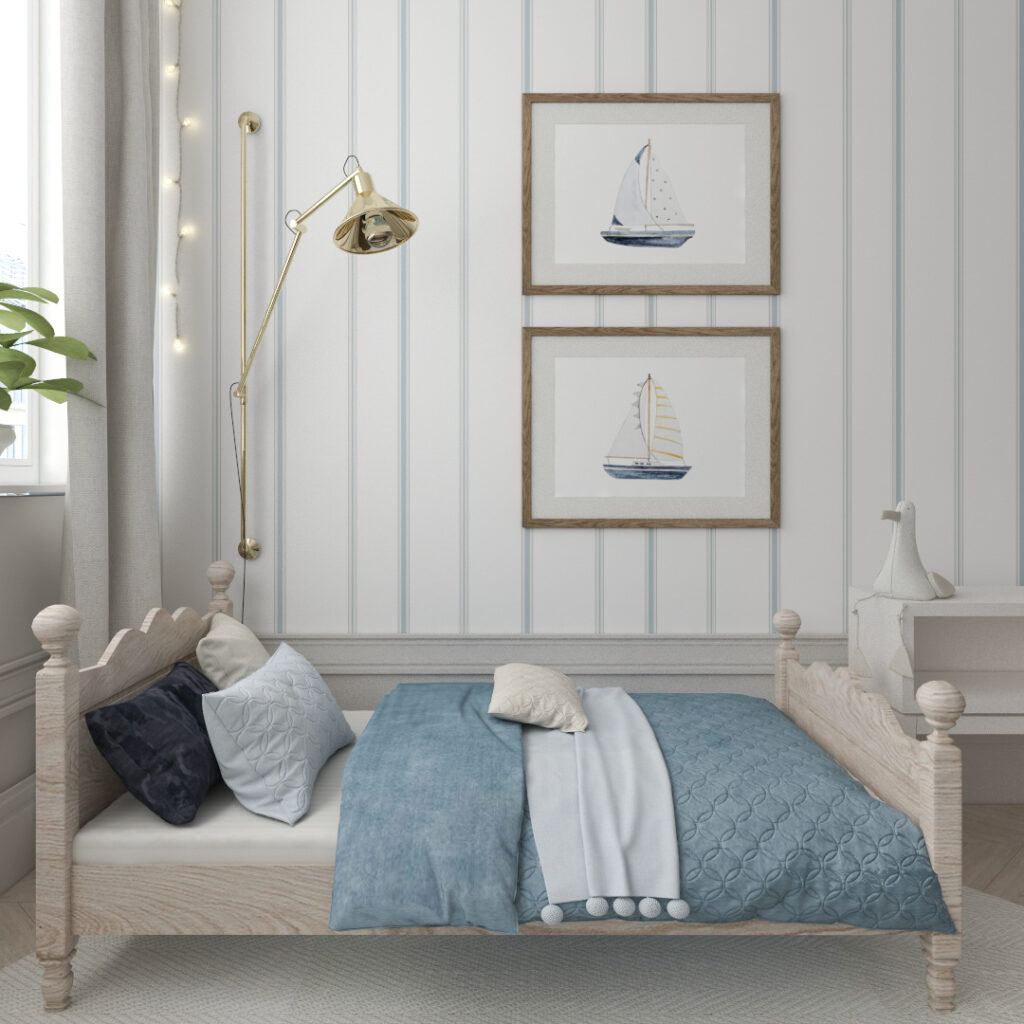
Disadvantages of paint – what problems can arise when painting?
- Less damage-resistant – although modern paints are increasingly durable, they're still not indestructible. Especially with young children who love experimenting with different materials, walls can quickly get covered in stains from paint, markers or modeling clay.
- Needs refreshing more often – in heavily used areas, paint needs refreshing every few years, which can mean extra costs and another renovation.
Wallpaper – durability and a variety of patterns
The most popular types of wallpaper for kids' rooms
- Paper wallpapers – the simplest and cheapest type of wallpaper. They're easy to hang but not very durable, so they're not recommended for kids' rooms, where walls can be damaged often.
- Vinyl wallpapers – they're highly resistant to moisture, dirt and mechanical damage. This means they can be easily cleaned and even scrubbed, which is extremely important in kids' rooms.
- Non-woven wallpapers – they're a compromise between the durability of vinyl wallpapers and the easy application of paper wallpapers. Thanks to the non-woven layer, they're more flexible and adhere better to the wall, which makes them easier to hang.

Wallpaper in a kids' room – benefits you and your child will love
- High durability – one of the biggest advantages of wallpaper, especially vinyl, is its exceptional durability. Unlike paint, wallpaper is far more resistant to mechanical damage. It works perfectly where walls see heavy use.
- A variety of patterns – wallpaper is a true treasure trove of patterns and colors. You can find dinosaur wallpapers, as well as wallpapers with favorite cartoon characters, flowers, space themes or abstract patterns.
- Easy cleaning – vinyl wallpapers are easy to keep clean. Most dirt, such as fingerprints, food stains or crayon marks, can be removed with a damp cloth. That's a huge advantage in kids' rooms.
Disadvantages of wallpapering kids' rooms
- Harder to apply – hanging wallpaper, especially more complex types, can require experience, precision and proper wall preparation. Improperly hung wallpaper can peel or wrinkle, which spoils the look of the room.
- Cost – good-quality wallpapers, especially eco-friendly or vinyl ones, can be more expensive than paint. But remember, it's an investment for years, so the expense can pay off in the long run.
Wallpaper or paint – which to choose?
Deciding how to decorate the walls in a kids' room – with wallpaper or paint – is often a tough choice. Both options have pros and cons, and the final decision depends on many factors, such as the child's age, how intensively the room is used and individual aesthetic preferences.
Paint is a good choice if you value design flexibility and easily refreshed walls, since walls are easy to repaint when you want a change. Paints are easy to apply, dry quickly and offer an unlimited color palette.
Modern wallpapers are the better choice if your priority is durability and damage resistance. They're also great for hiding wall imperfections and can improve a room's acoustics. Wallpaper also lets you bring unique patterns and textures into a kids' room that are hard to achieve with paint. When deciding how to decorate the walls, remember that wallpaper or paint is a choice that affects both the function and the look of the room.

What to put on the wall instead of paint and wallpaper?
Wall decals are a simple, striking way to change the look of your walls, whether the room already has wallpaper or paint. Kids' room wall decals come in countless designs, from delicate botanical motifs to bold graphics and lettering. With them, you can create a real art gallery in your home and also define separate functional zones. Decals are easy to apply and remove, so you can change the decor often.
Wall panels are an increasingly popular solution that combines aesthetics with functionality. They're not just an attractive but also a practical choice for a kids' room. The soft, pleasant-to-touch surface of upholstered panels makes the room a safe place to play. With a variety of patterns and colors, they're easy to match to the room's style and your child's interests. And if your child likes changing their surroundings, they're also relatively easy to replace.
Wallpaper or paint the walls?
In our opinion, a good combination of the two can be the perfect middle ground when designing a child's room. Choosing a soft paint color such as beige, white, light gray or dove blue combined with a non-woven wallpaper with a delicate pattern creates a versatile backdrop that can easily be restyled over the years without repainting or rewallpapering.
Whatever the style, well-chosen wallpaper will certainly help create a cozy, safe room for your child. A well-planned space, whether wallpapered or painted, supports your child's development and creates the perfect place to play. Remember that a child's room should be safe, cozy and supportive of development. A well-planned wall design will certainly help create the ideal space for your little one.
