



Blog, Guides for you
Kids' Room Wallpaper – How to Create a Space That Supports Your Child's Development?
Furnishing a kids' room is exciting for parents, but it's also a challenge they have to rise to. Dilemmas can arise as early as choosing the wallpaper. Should it be light or dark, colorful or rather pastel? And does it even matter? At Royal Rabbits, we know it does, so we'll help you choose wallpaper that's attractive, functional and supports your child's development from day one.
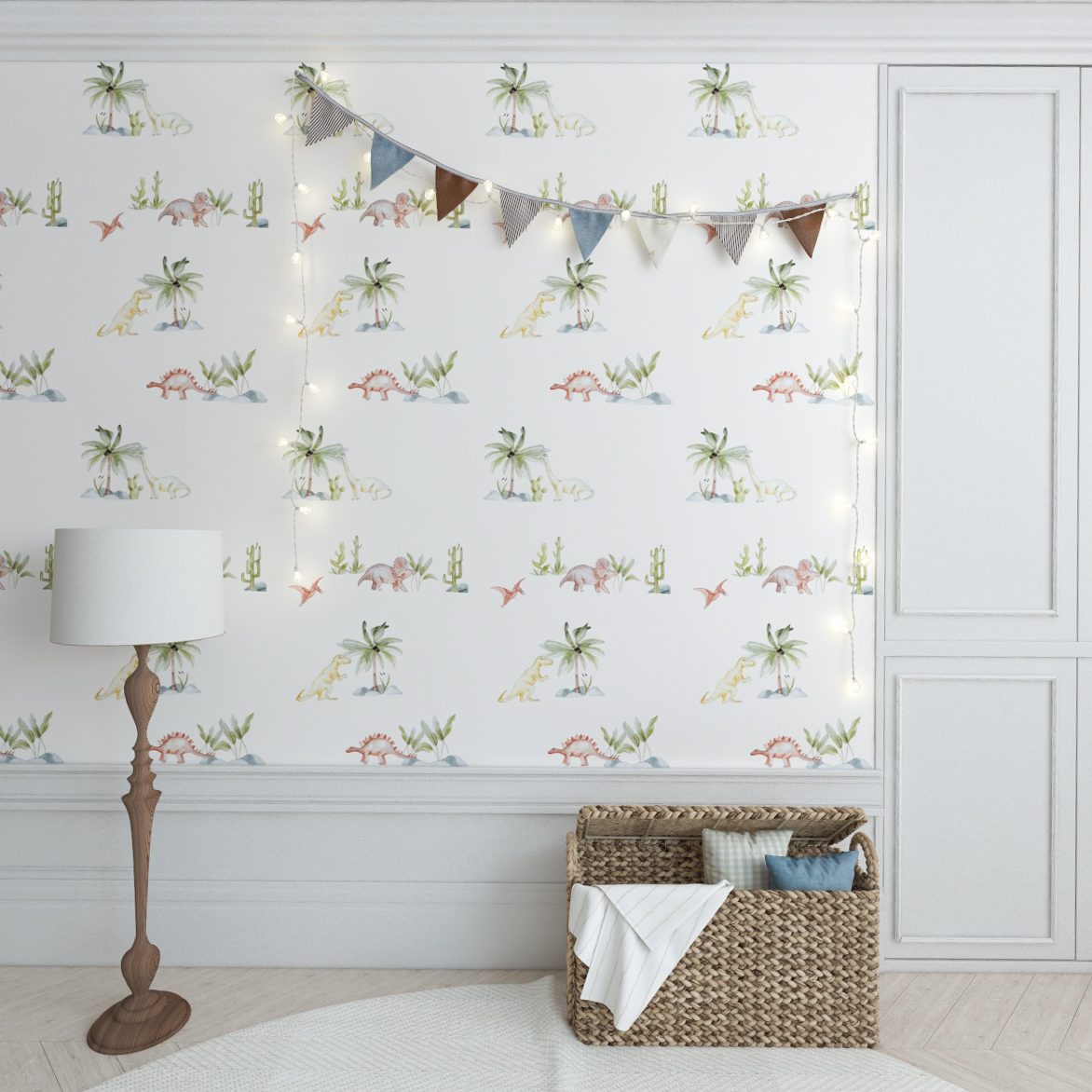
Kids' room wallpaper – how to create a space that supports development?
Decorating a child's room with wallpaper is one of the better ideas parents can have. Even wallpaper applied to only half the wall can bring a sense of calm and much-needed warmth. This approach solves the dilemma: wallpaper or paint.
The choice of wallpaper should be closely tied to the child's age:
– Nursery wallpaper should have light, soothing colors. This kind of wallpaper fully supports a baby's development by limiting unnecessary stimuli. Neutral colors are the best choice for a baby.
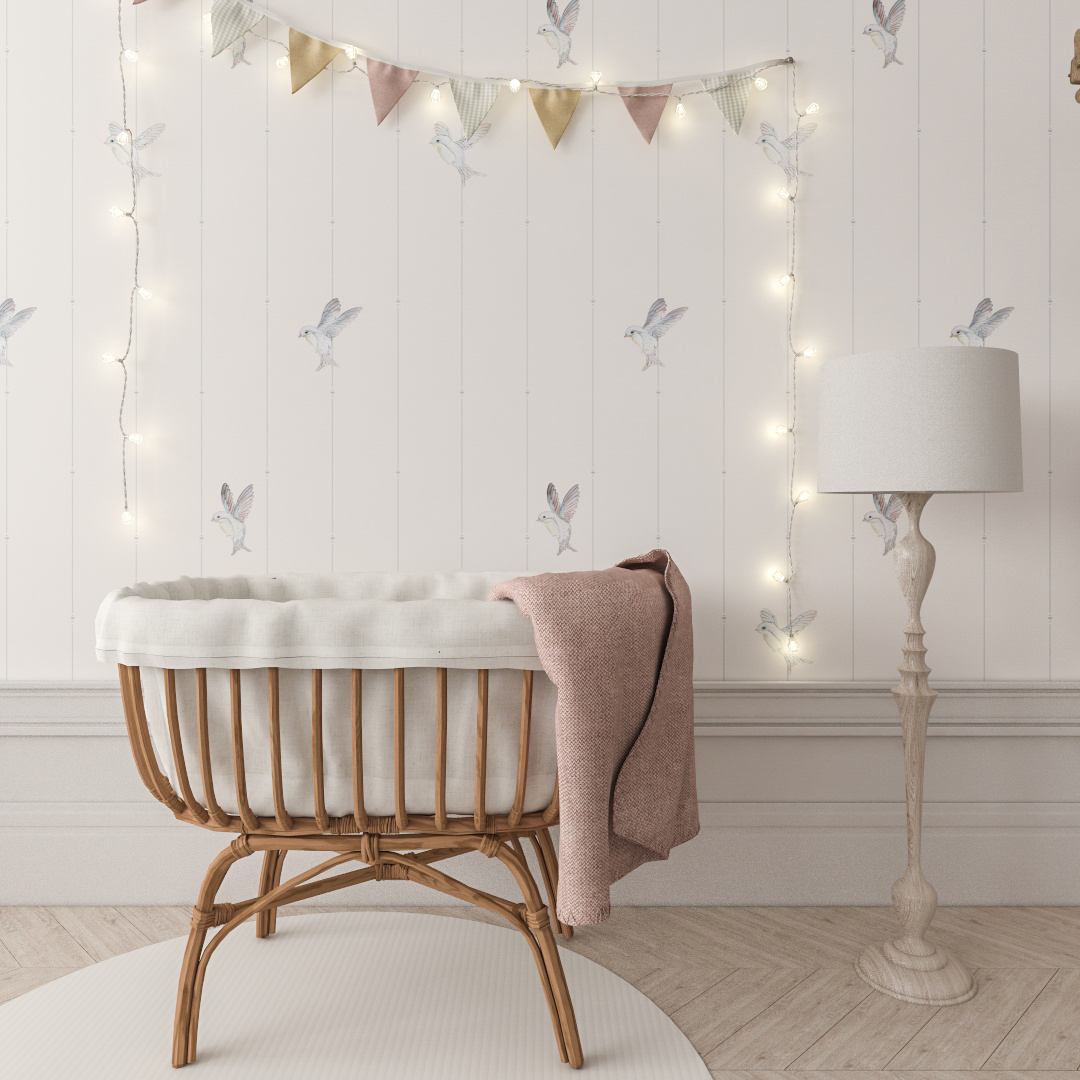
– Wallpaper in a young child's room can help them learn colors and shapes. Which colors do kids like? It often depends on their gender, but also on what's popular at preschool.
– Wallpaper in a schoolchild's room should bring a slightly more grown-up mood. Of course, the patterns can still be typically childlike, but make sure their style isn't too babyish.
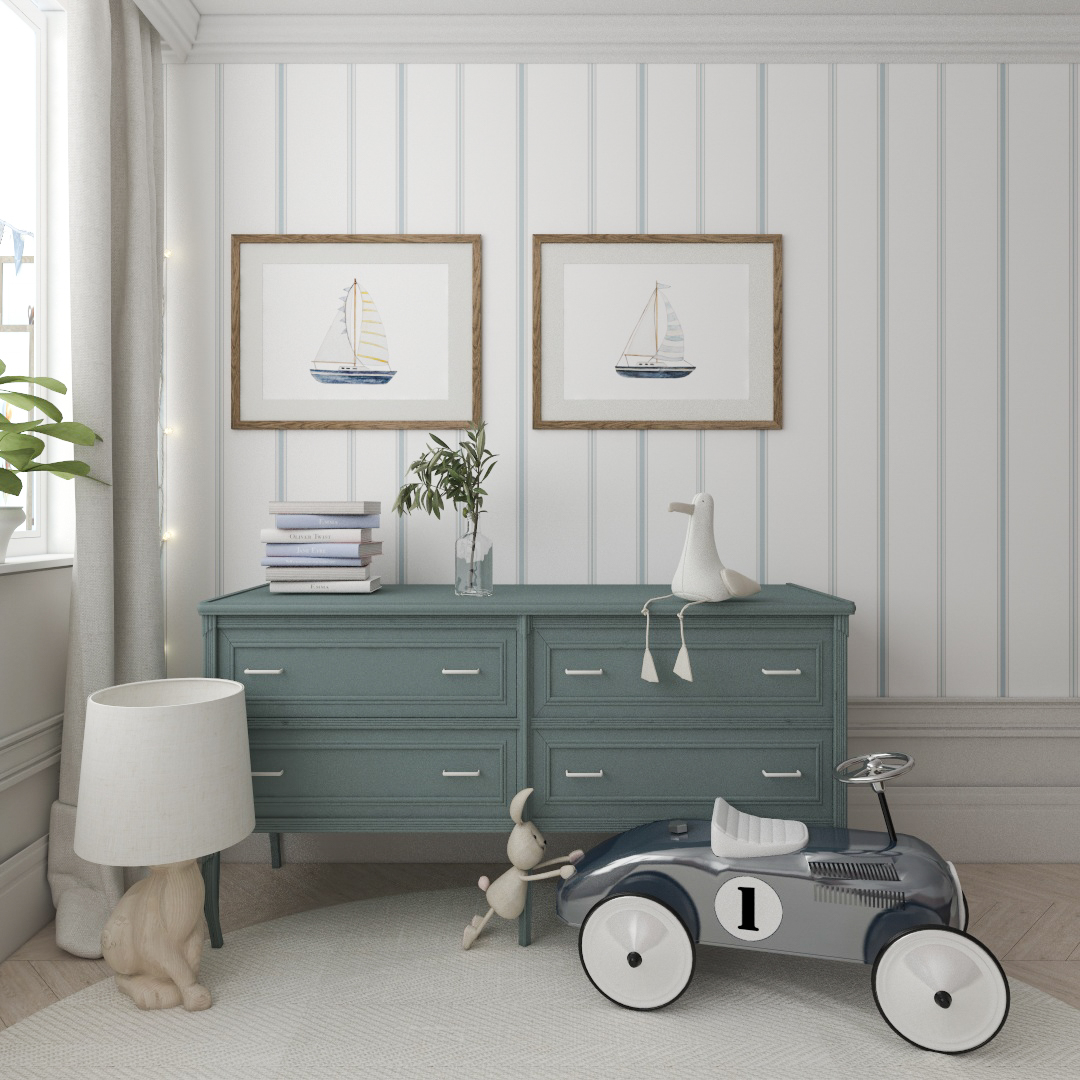
– Teen room wallpaper is a very individual matter. Teens usually want to choose it themselves, but it's worth keeping an eye on things. Decorating their room on their own for the first time is a valuable lesson in aesthetics and combining colors and motifs. This is where a clear division appears: girls' wallpaper is completely different from boys' wallpaper.
How to choose wallpaper for a child's room? The key things to consider
What's the best wallpaper for a child's room? It's worth going for durable, timeless solutions.
Paper kids' wallpaper available on the market is cheap and comes in many patterns and colors – and… that's where its advantages end. It isn't resistant to mechanical damage, wears out quickly and can't be washed.
At Royal Rabbits, we offer three types of wallpaper:
– Non-woven wallpaper 130 g – wallpaper with a durable surface and colors,
– Non-woven wallpaper 155 g – same properties as the 130 g wallpaper, and it can also be washed if needed,
– Linen or silk wallpaper on a non-woven backing – can be washed with mild detergents.
It's also worth paying attention to the wallpaper's colors and pattern and finding out how room decorations affect a child's development.
Wallpaper colors and child development – which colors support creativity?
Wallpaper colors and child development may seem like a far-fetched topic, but only until you dig a little deeper.
It's no accident that young children's rooms are very colorful. Red, yellow and orange are the colors that most stimulate imagination and creativity. If they're present in your little one's room, you're sure to raise a little person who's keenly interested in everything around them.
For balance, don't forget soothing pastels that make it easier to concentrate. These colors, combined with shades of green and blue, should definitely appear in a schoolchild's room.
Kids' wallpaper motifs – which patterns work in a room for sleeping and playing?
Ideas for a kids' room cover not only colors but also wallpaper patterns. A motif on the wallpaper can be a gold mine of ideas and inspire many games.
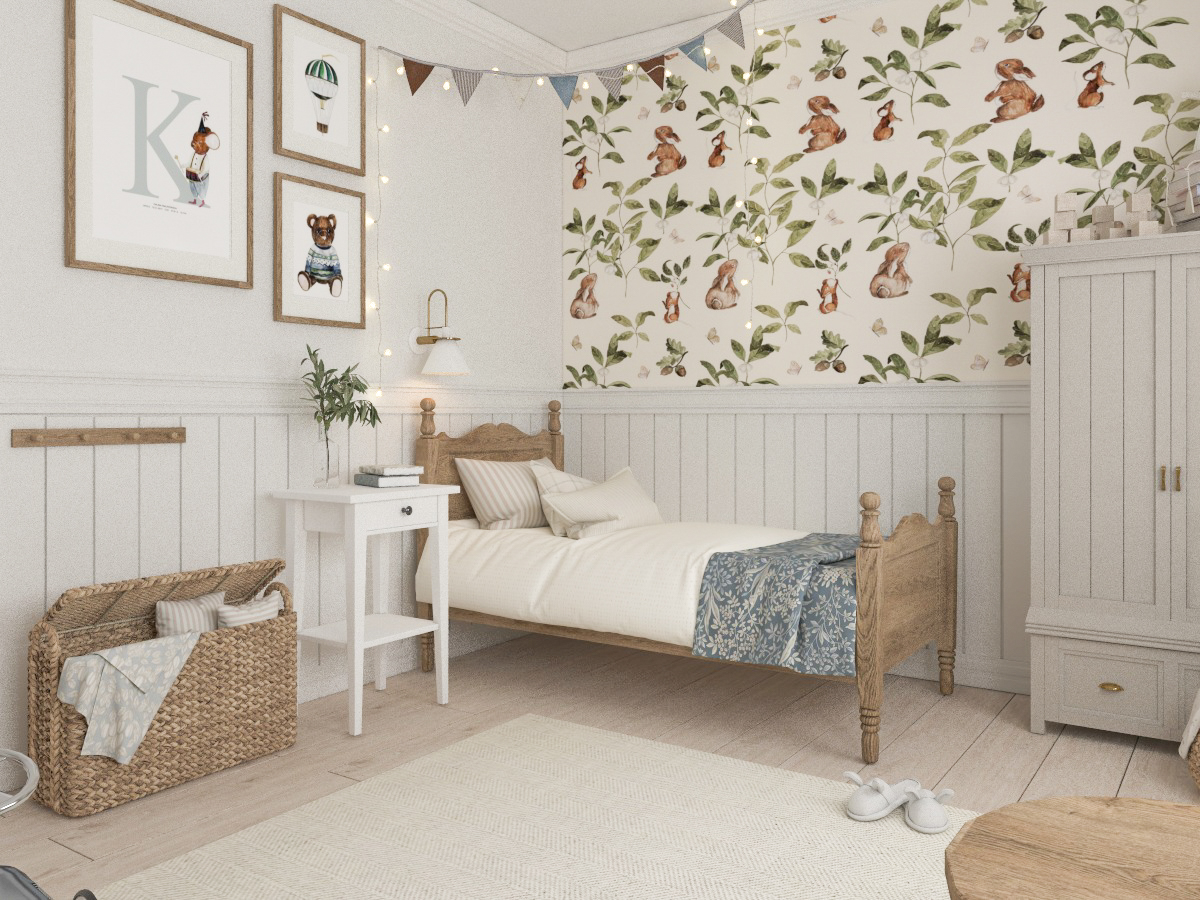
Wallpapers with motifs of fairy-tale characters, vehicles, animals or toys are a good choice for the play area in a child's room.
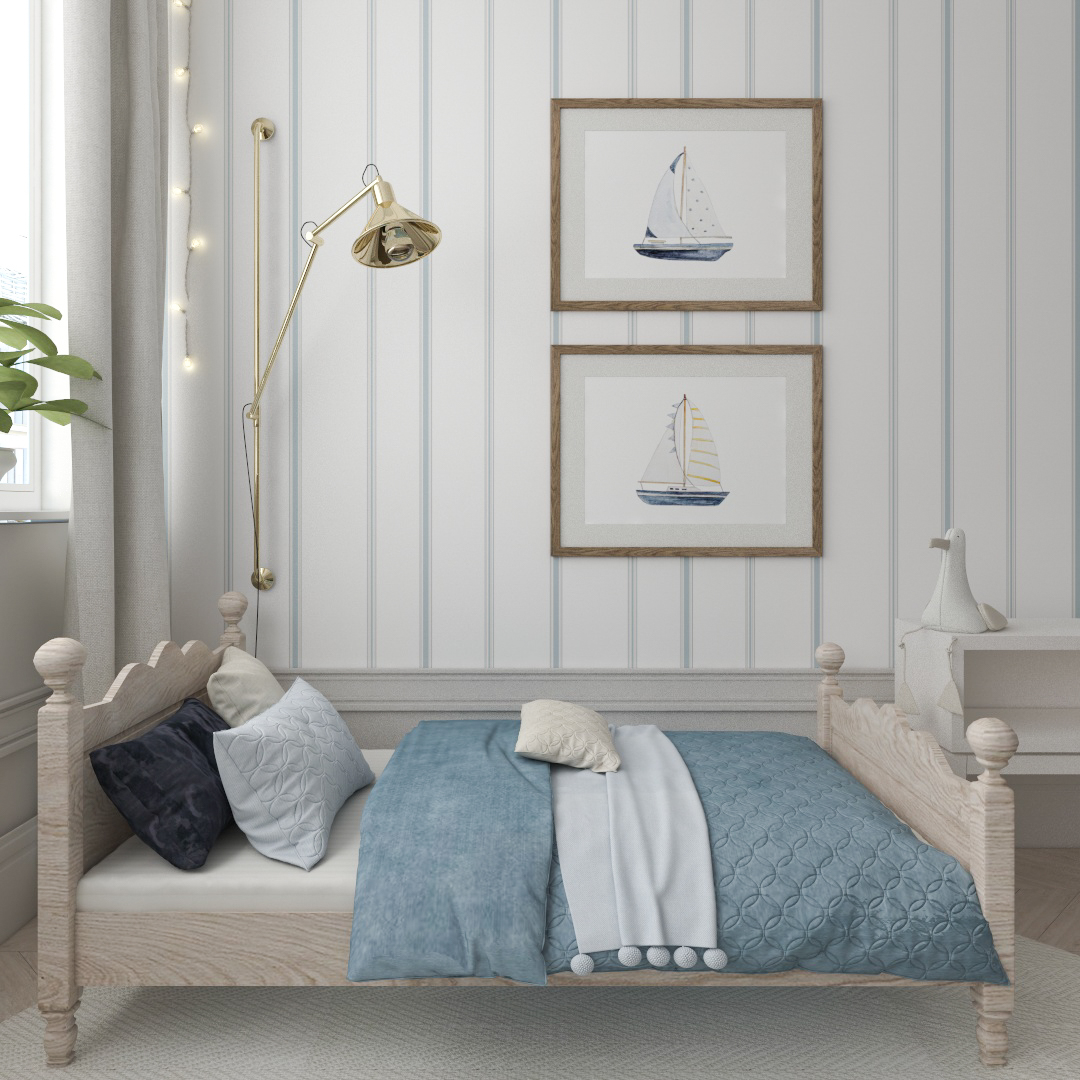
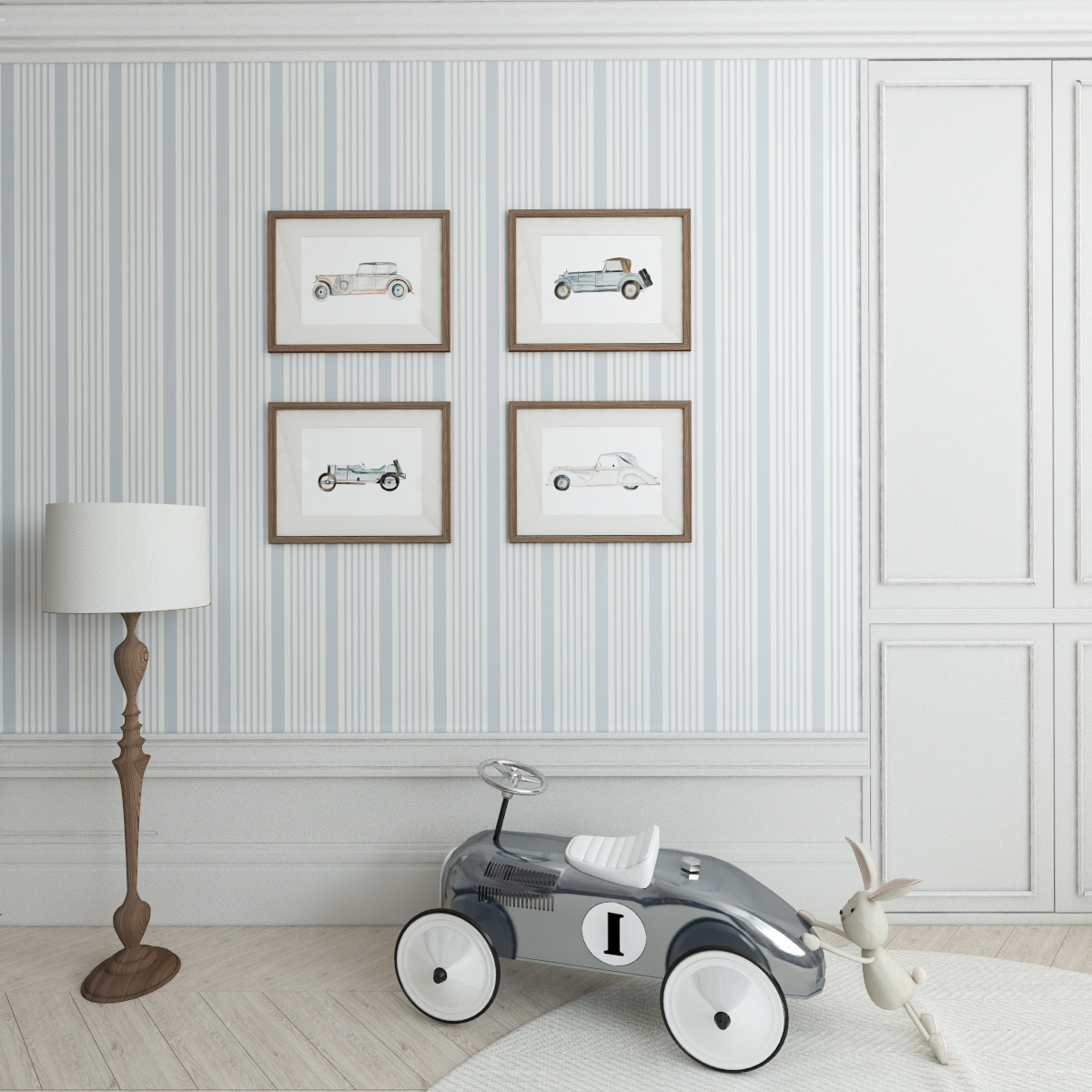
In the study, rest and sleep areas, on the other hand, wallpapers with neutral geometric patterns, e.g., stripes, work better.
Safe wallpaper for kids – what to look for?
Wallpapers that support children's development must be attractive and durable, and they must also meet safety requirements.
Safe wallpaper for kids is wallpaper that:
– doesn't contain toxic compounds, e.g., formaldehyde,
– doesn't give off a strong odor after unpacking,
– has a clearly specified composition,
– can easily be removed from the wall if needed.
As for the safety of the wallpaper itself, we definitely don't recommend paper wallpapers, which little hands can easily damage.
Wallpaper in a child's room – from inspiration to installation, step by step
Now that we know which wallpaper is best for a child's room, it's time to find out how to order it and hang it on the wall.
– Measure the width and height of the wall. Add 5 cm (2 in) on each side.
– Use the configurator to order your wallpaper.
Your order includes wallpaper rolls up to 1 m (39 in) wide, plus adhesive and instructions. We know getting started can be tricky, so we always include more adhesive than the calculations call for.
How to hang the wallpaper:
– Make sure the wall is dry and free of unevenness. If it was painted with oil-based or washable paint, it may have too little adhesion. In that case, you need to scuff it, e.g., with sandpaper.
– If the wall is covered with other wallpaper, remove it.
– You can hang wallpaper on a wall that was painted at least three weeks ago.
To hang wallpaper, you'll need classic painting tools: a smoothing tool, a brush or roller, and a sponge or cloth. Make sure you also have access to clean water.
