



Blog, Guides for you
How to Make a Kids' Room Look Bigger? Tricks for a Small Kids' Room
Kids' rooms are often very small or narrow. Organizing a child's space there is quite a challenge. After all, just because a child is small doesn't mean they have few things. In fact, they have a lot. Limited square footage combined with tons of toys, clothes and baby gear can give many parents a headache. The key to success in designing such a space is, above all, good planning and a few clever tricks.
Of course, by following a few design rules, you can make such a room look bigger and gain some space. The first rule for designing a small room is to plan the zones well.
Which zones can you create in a small kids' room?
In a small kids' room, visually enlarging the space can significantly improve comfort and functionality. The key element is the sleep zone, which should be designed to save space while staying comfortable.
The bed is the most important piece of furniture in a child's kingdom. It's where they recharge after a day full of excitement. A bunk bed is the perfect solution for siblings, providing two comfortable sleeping spots while taking up the space of just one bed. If the room belongs to one child but you want a place for guests to sleep, a trundle bed is an excellent solution. During the day, the second bed is tucked away, making the kids' room feel more spacious.
In a small kids' room, a well-designed study zone matters too. This is where your little one will develop their passions, gain knowledge and do homework. The heart of the study zone is the desk. It should be big enough to hold all the necessary books, notebooks and supplies without cluttering the room. Models with drawers or shelves that help keep things tidy work great.
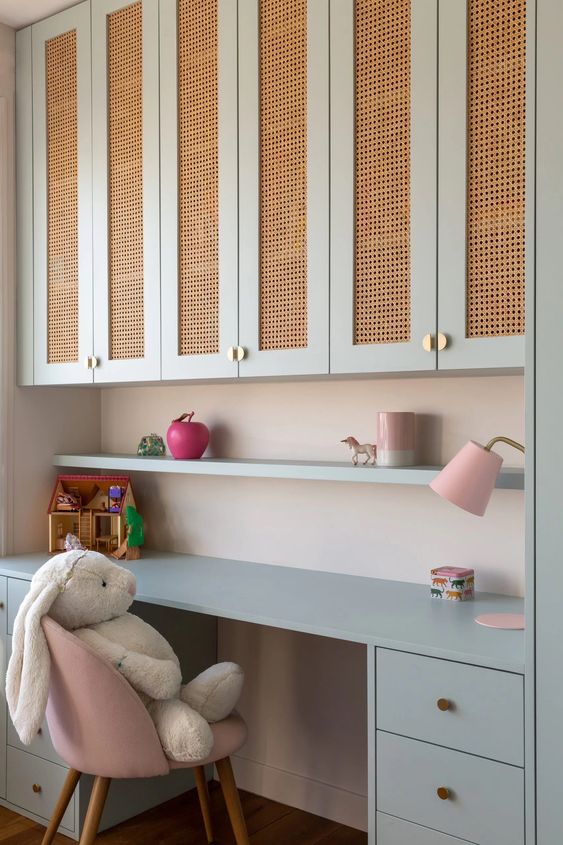
In a small room, finding enough space to play can seem like a challenge, but with a little ingenuity, you can create a true paradise for a little explorer.
In a small room, every square meter of floor counts. That's why it's worth setting aside a central play area, leaving the middle of the room free. This gives your child more room to romp around, and the room will feel more spacious.
Remember that zoning is really about making a small room serve you as well as possible and suit your child. Such a space works better for you and grows with your little one.
Now I'll show you which rules to follow in small kids' rooms – and not only there. These rules are very universal.
How to make a kids' room look bigger: rules for visual enlargement
- Floor – ideally, the floor should be fairly uniform. The flooring material and color will probably be the same as in other parts of the house. But in a kids' room, an extra rug or mat is very important. The largest possible rug in light colors works very well. Design-wise, a minimalist version is best, i.e., without patterns and in a single color. It could be a bound, fluffy carpet cut to size.
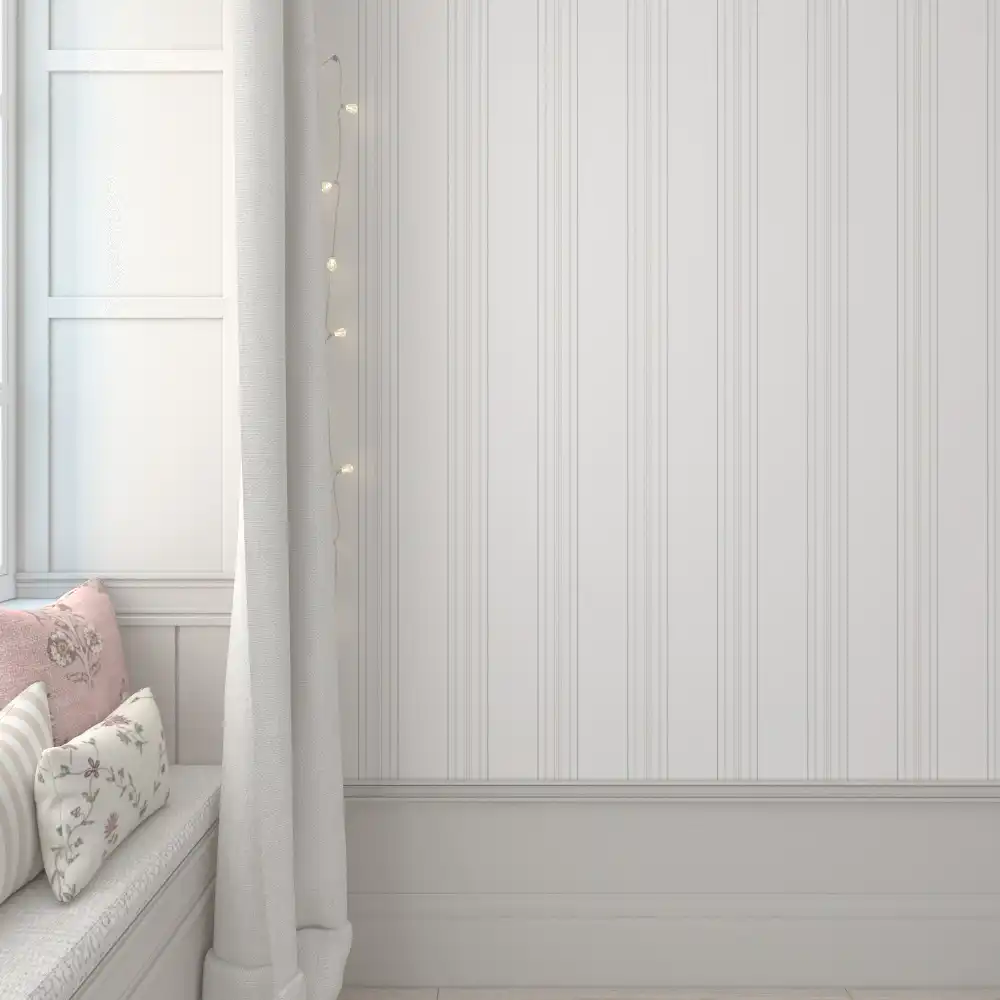
2. Walls – light walls in shades of soft gray, sand or beige work very well in rooms like these. I also highly recommend using wallpaper in small rooms, as it visually adds space. In this case, a great option is one of our striped wallpapers such as Pink Peony Stripes. Delicate line art wallpapers in muted colors also look good in small rooms. A good example is our line art peony wallpaper with a ruffle in light blue and pink, or woodland motifs. Plaids and dots are also neutral wallpaper options. With neutral colors, you may miss some childlike accents. You can use our wall decals for this, covering a section of wall near the play area or simply sticking them on doors or furniture.
3. Furniture – when it comes to furniture, I'd definitely go for built-ins such as custom wardrobes, always floor-to-ceiling. Not only does this make a small room look bigger, it also gives you extra storage. It's also better to avoid scattered individual pieces such as dressers, little tables, cabinets and so on. It's much better to use solutions such as combining toy storage with a worktop for creative projects.
4. Fabrics – I wonder if you've ever thought about how big a role fabrics play in interiors? A kids' room is often about 8-12 m2 (about 86-130 sq ft), while the total area of fabrics such as curtains, sheers, throws, bedding, decorative pillows and the rug is much larger. That probably best shows how key fabrics are. In small rooms, I recommend very smooth fabrics, but with beautiful textures. Duvets and decorative pillows can have delicate patterns in pastel colors.
5. Posters – you could write a trilogy about failed gallery walls. And it isn't even that hard. There's a golden rule – follow it! It's better to have one very large picture in a beautiful frame with a passe-partout mat than several smaller ones. This is especially important in small rooms. Take a look at our kids' wall posters. We have a huge selection.
6. Colors – this rule applies to all the rules above. Stick to a maximum of 3 colors, preferably light and pastel ones. It's a good idea to prepare a color palette and check while shopping that the products you choose fit within it. If you stick to these 6 rules, the kids' room will be functional and look much bigger. And as a side effect, it'll also be beautiful and timeless.
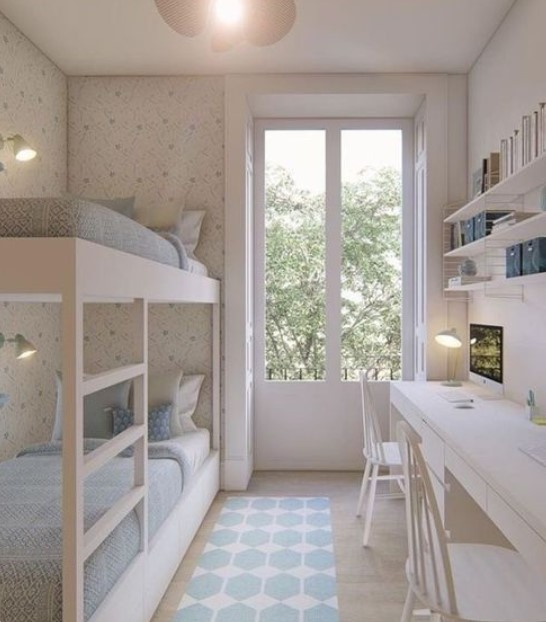
How to make a room look bigger with wallpaper?
In a small kids' room, the right wallpaper can work wonders, visually enlarging the space and giving it character. Which tricks are worth using?
- Light colors are the foundation. White, cream, gray, soft light blue – these colors reflect light, making the room look brighter and more spacious.
- Stripes – vertical or horizontal? It depends on the effect you want. If you want a small kids' room to feel taller, choose wallpaper with vertical stripes. Vertical lines draw the eye upward, making the ceiling seem higher. In narrow rooms, on the other hand, horizontal stripes work better, as they visually widen the room.
- A wall mural with perspective, e.g., a landscape or city panorama, can create an illusion of depth and visually enlarge a kids' room. Just remember to choose a wall mural with light colors and a clear pattern.
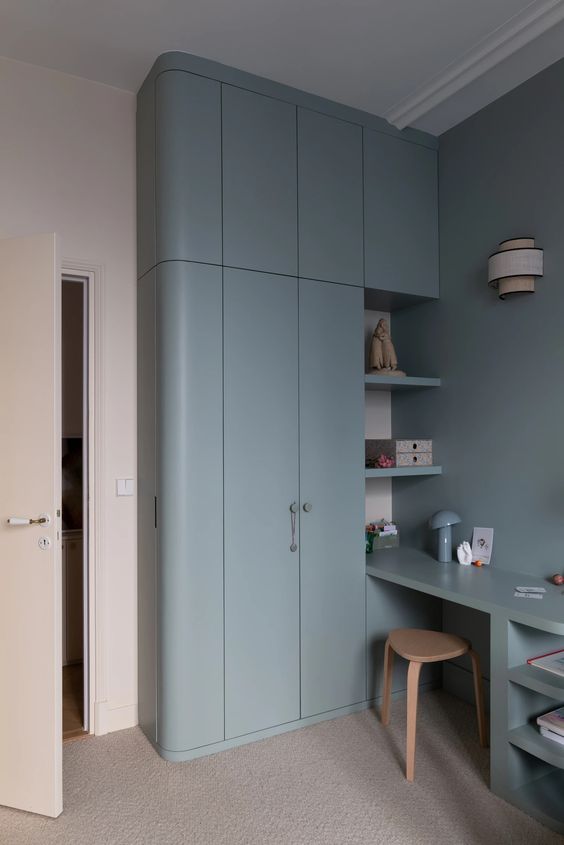
How to make a room look bigger with color?
One of the most effective ways to make a room look bigger is to unify the colors of the walls and floors. By choosing similar tones, you blur the boundaries between walls and floor, making the room seem bigger. Go for light shades of white, beige, gray or pastels that add spaciousness.
If you want to bring stronger colors into a small room, do it in moderation. Choose one or two accent walls in more intense colors and paint the rest a light shade. This contrast won't overwhelm the space.
Painting the ceiling a lighter color than the walls is another clever way to make a room look bigger. The ceiling will then seem higher. It's also a good idea to leave a strip of white along the top edge of the walls, which enhances this effect even more.
