



Blog, Colors in a kids' room, About styles
How Do Room Decorations Affect a Child's Development?
A kids' room isn't just a place to sleep and rest but also to play and learn. Especially in the first years of life, little ones spend a lot of time in their room – and that's when intense physical and cognitive development takes place. A well-thought-out design for a child's room can significantly influence these processes. It's worth paying attention to both the furniture and the decorations in your child's room. The decorations we choose have a huge impact on a little person's development. So it's worth considering which decorations will be best for your little one.
Decorations in a child's room and color psychology
A newborn sees only 3 colors after birth: black, white and red against a light background. At first, their world is very limited in terms of color, but as they grow, they gradually see more colors: green at 2 months, yellow at 3 and blue at 4. Your little one will see all colors at around 6 months. The colors around a baby and a young child can significantly affect their mood and activity. It's no accident that light, pastel colors are chosen for kids' rooms, including:
- white,
- gray,
- beige,
- blue,
- yellow.
Children's interior designers encourage parents to embrace minimalism. And not just for aesthetic reasons. Too many stimuli around your little one (e.g., patterns and textures) can overstimulate a child's nervous system, resulting in, among other things, a reduced ability to concentrate. Light, pastel colors help a child calm down and have a positive effect on their sense of security.
Muted colors have a soothing effect on your little one's senses, helping them relax. Limiting the number of toys and decorations in your child's room also benefits their development. A child who isn't overwhelmed by too many stimuli has more room for creative play and learning.
Which color calms a child?
Individual colors are believed to affect mood. For example:
- Green is said to support concentration. It's an ideal choice for the room of a child who has trouble paying attention or is hyperactive. Green accents in the form of plants, pictures or textiles bring harmony to the space.
- Yellow and orange add energy and are associated with warmth, vitality and a positive attitude. In a child's room, they work well as color accents, e.g., in accessories such as cushions, lamps or toys.
- Among calming colors, the leader is blue. In a child's room, it works especially well in light, pastel shades that won't overwhelm the space. You can use it on walls, furniture, bedding or accessories.
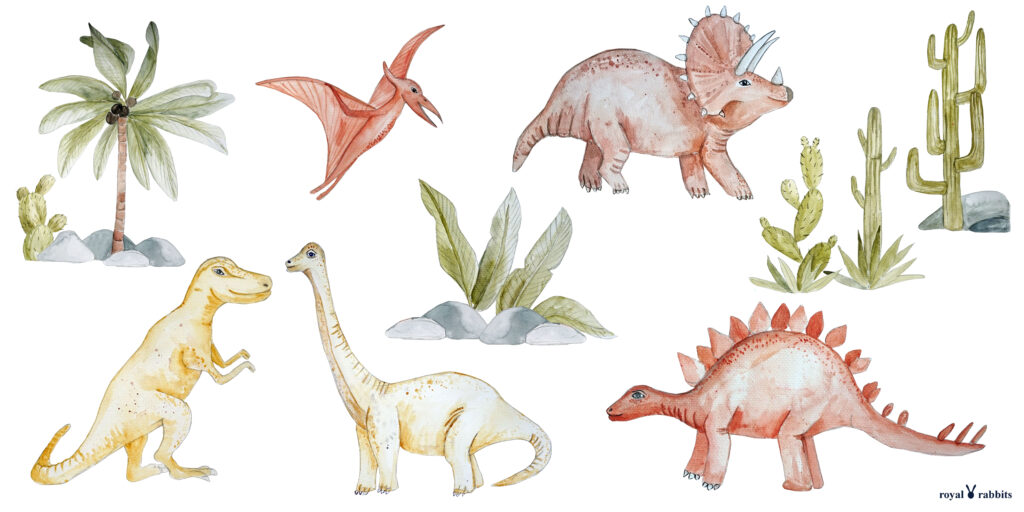
You can use this information when choosing accessories for a kids' room. Go for smaller decorations in other, bolder colors, e.g., dinosaur wall decals for a boy. Just make sure they don't dominate the room.
Room design and child development – the sense of touch
Children are sensitive not only to colors but also to the textures of objects around them. That's why it's important to give them a sensory-friendly space. Choose decorations made of soft, pleasant-to-touch materials, such as a rug, decorative cushions, a blanket and cuddly toys.
Make sure your child's room has things they can grab, squeeze and knead. Beanbags filled with polystyrene beads, soft plush toys, wooden blocks, hard and soft squeeze toys – all of these stimulate the sense of touch and help develop hand-eye coordination.
Benefits of wall decor for a child's room
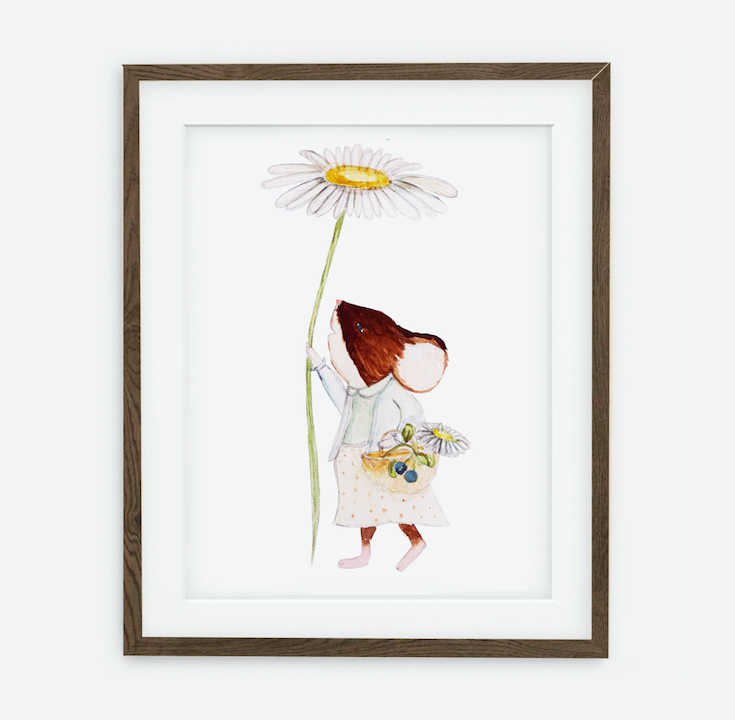
In recent years, wall decorations have become especially popular in kids' rooms. They have many advantages worth considering:
- they take up little space,
- they're easy to swap for new ones,
- they're less prone to damage,
- they pose no danger to small children, unlike, e.g., a glass vase or a porcelain figurine,
- they can come in any size, color scheme and theme.
Which decorations for a nursery?
From around 4 months, babies can make out shapes, so they love watching the world around them. Still, this is a time when they mostly lie down, and they can only explore their surroundings when carried. That's why it's worth adding elements to your child's room that will catch their eye and spark their imagination. A great example is colorful kids' wallpaper with fairy-tale patterns. You can decorate one wall of the room, e.g., the one by the crib. This way, your little one will have something to look at while lying on their back or side.
Choosing decorations for a young child's room
In every parent's life, there comes a time when they notice the aesthetic sensibility of their child. You can see it, e.g., when your little one refuses to wear polka-dot shorts or prefers a shirt in a different color. Preschool and early school-age children are little explorers with their own tastes and preferences. It's no different with decorations for a child's room, and you should take the youngest family member's opinion into account. It's best to choose decorations together that match your child's interests, e.g., wall decals or a world map poster for a little one who's fascinated by geography.
Room for creativity
Little ones with an artistic streak can have a real say in how their rooms look. An interesting idea for decorating the walls in a child's room: a chalkboard or special chalkboard paint, which you can use to paint one of the walls. This way, parents can give their child a safe space to draw whatever they like. Just wipe the board clean, and the wall is ready for a new masterpiece.
Educational decorations – a child's room that supports development
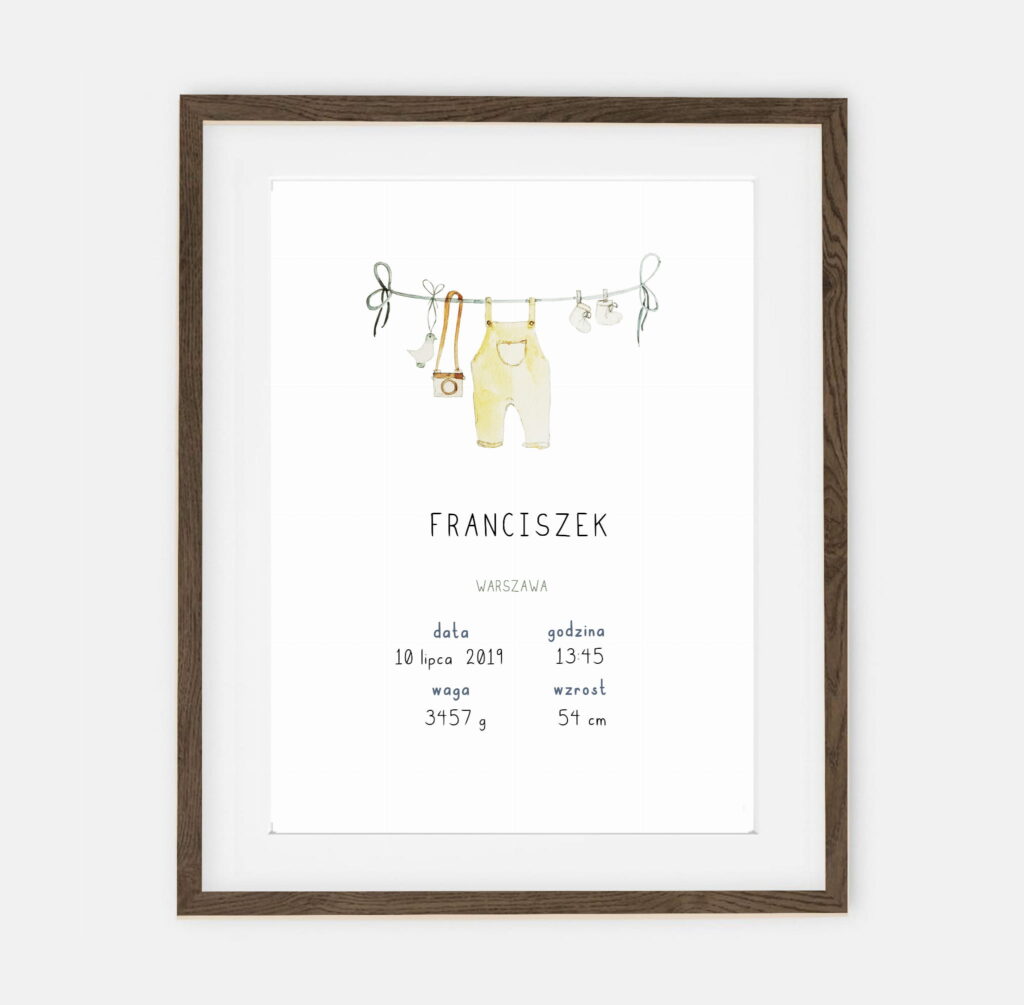
Besides their visual appeal, decorations for a kids' room can also be part of everyday learning and reinforcing information. Children love repetition, such as all kinds of counting rhymes and nursery rhymes, which support memory development. Besides atlases and books, you can also use wall decorations in your little one's room for this, e.g., an educational alphabet poster, which your child can look at every day. Pictures of different species of animals and plants work just as well.
Room decorations play an important role in your child's development. Their colors alone affect your little one's mood and shape their sense of aesthetics. Older children focus on details and like to surround themselves with interesting decorations. Wall decorations in a kids' room can help with learning, e.g., letters, animal species or country names. Let your little one choose decorations that reflect their interests.
