



Guides for you
How to Furnish a Child's Room? Advice from a Royal Rabbits Architect
Every parent wonders how to decorate a child's room nicely. It's a challenge on many levels: children grow, and their needs change with age. A baby's room certainly looks different from a preschooler's room, and later from a schoolchild's room. So how can you arrange a small child's room, making future design changes easier and cheaper? Practical advice comes from Ola Węgiełek-Król, an interior architect and mom of a little girl.
How to furnish a kids' room? The functional layout
Dreaming of creating a special corner for your child? Before you go shopping and start putting your ideas into practice, take a moment to plan the design carefully. When you're planning a nursery for a new family member, it's worth approaching it like an interior architect. The professional method is to measure the room and draw it up.
- Measure the child's room along the walls.
- Determine the ceiling height.
- Measure all door and window openings: their width and height.
- If you're planning wall decor, draw so-called elevations, i.e., the width and height of the walls including openings, e.g., for wall lights.
- Based on this, you can create a dimensioned floor plan of the room, which makes it easier to plan furniture and decor.
- Create 3 versions of the functional layout. Compare them and choose the best one. This way, you'll avoid basic design mistakes, e.g., not having room for key nursery furniture.
Zones in a child's room, or how to design a kids' room?
A nursery for a girl or boy should be planned several years ahead, taking into account how the child and their needs will change over that time. You can assume that a bigger renovation, or simply a wall refresh, will be needed when your little one starts kindergarten. In the meantime, though, the child's room will keep changing its character. Right at the start, you can define the basic zones in the room.
Defining the individual zones makes it easier to keep the room tidy and helps your child learn where to keep their things. With the right arrangement of furniture and accessories, you can furnish a small kids' room so that each zone supports different aspects of your child's development.
Sleep and rest zone – the most important part of a child's room
Nursery plans should include a cradle measuring 90 x 40 cm. Over time, however, you'll need to bring in a crib with slats (min. 120 x 70 cm), and eventually a bed for an older child (approx. 200 x 90 cm). A practical solution is a so-called extendable bed, which can be lengthened as the child grows. Room for a bigger bed can be made, e.g., by removing the nursing chair, which a preschooler will no longer need.
Play zone in a child's room
A nursery needs space for a play mat, the baby's first play area. Over time, though, the toys will start piling up, often generously gifted by family and friends. It's worth taking care of their organization and attractive display in the room. You can use shelves for this, e.g., for arranging stuffed animals.
Tip: You can put some toys away – a wicker chest or a drawstring canvas bag works well for this. Toys that are put away for a while and then brought back out may seem exciting to your little one all over again.
Study zone for an older child
Once your child turns one, it's worth thinking about buying a small table and chair, where your little one can draw, paint, make collages and play with modeling clay. This furniture should be adapted to the height of your child, but you can buy it with a little room to grow, because young children grow fast. When planning the study zone, keep in mind that in the future the table will need to be replaced with a bigger desk with drawers for notebooks and school supplies.
Storage zone in a child's room
At first, this area can hold a changing table and a dresser for diapers, baby clothes and other accessories. Over time, there will be more and more clothes, and they'll take up more space. Then you can replace the changing table and dresser with a larger wardrobe with drawers, shelves and a hanging section. It's worth organizing a small kids' room so it also includes furniture for toys, such as a display cabinet with shelves for books and puzzles.
Finishing touches – how to furnish a small child's room?
Besides functionality, an attractive design for a small kids' room matters too, one that both parents and little one will love. To create a well-thought-out kids' room design, choose:
- a base color scheme – the wall and floor finishes should be cohesive and muted, which is why white, gray and beige work well. These are the most versatile colors; they visually enlarge the space and create a bright, friendly atmosphere.
- an accent color – it will appear on smaller items such as cushions, a rug, bedding or curtains; you can choose any color, e.g., pink, blue or green. These accents liven up the room and create a cozy corner for your child.
The advantage of a versatile base color scheme is the ability to easily change the accent color later on, e.g., once your child has a favorite color.
How to decorate a child's room?
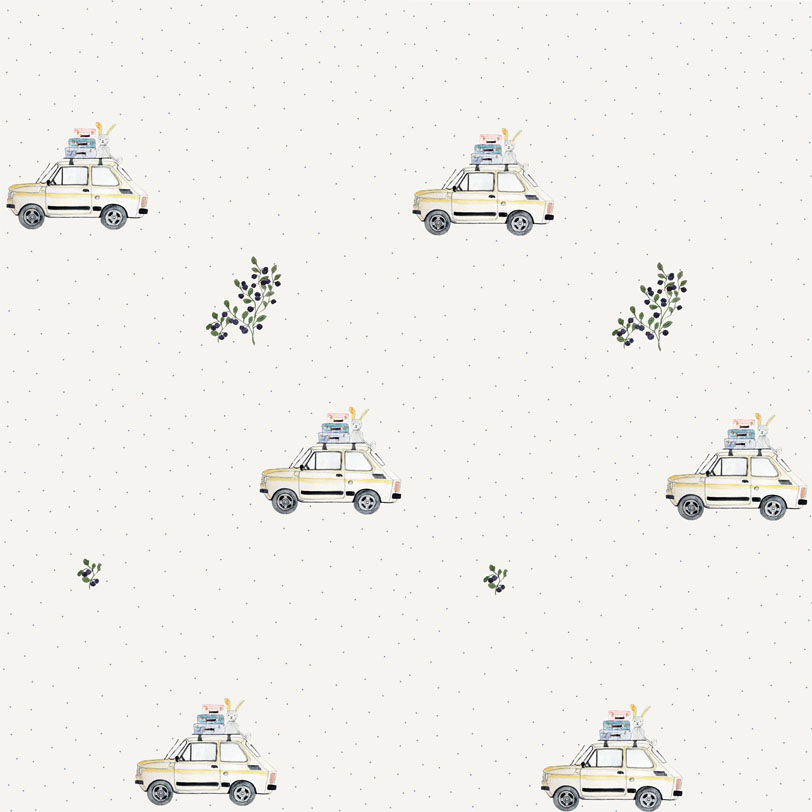
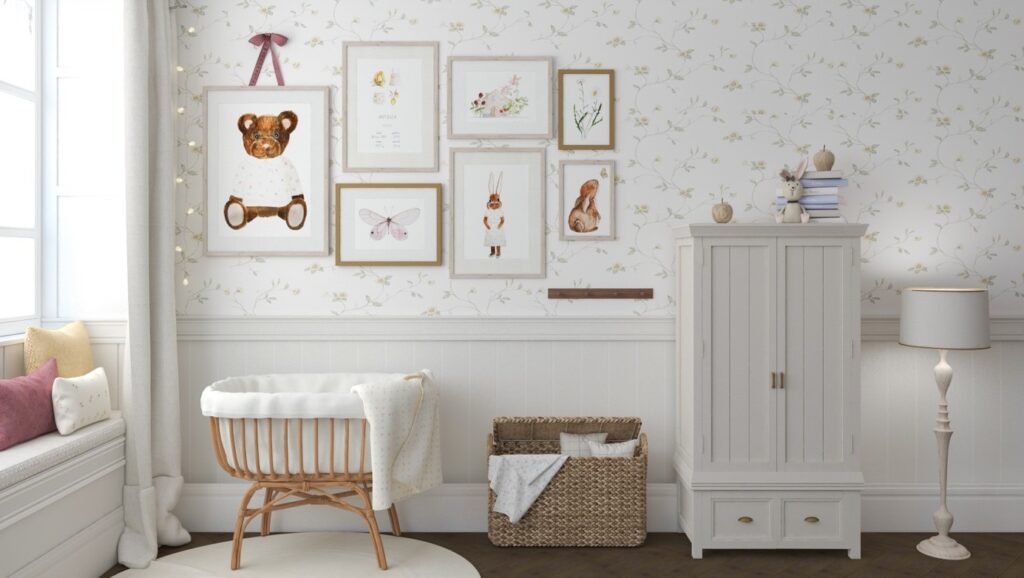
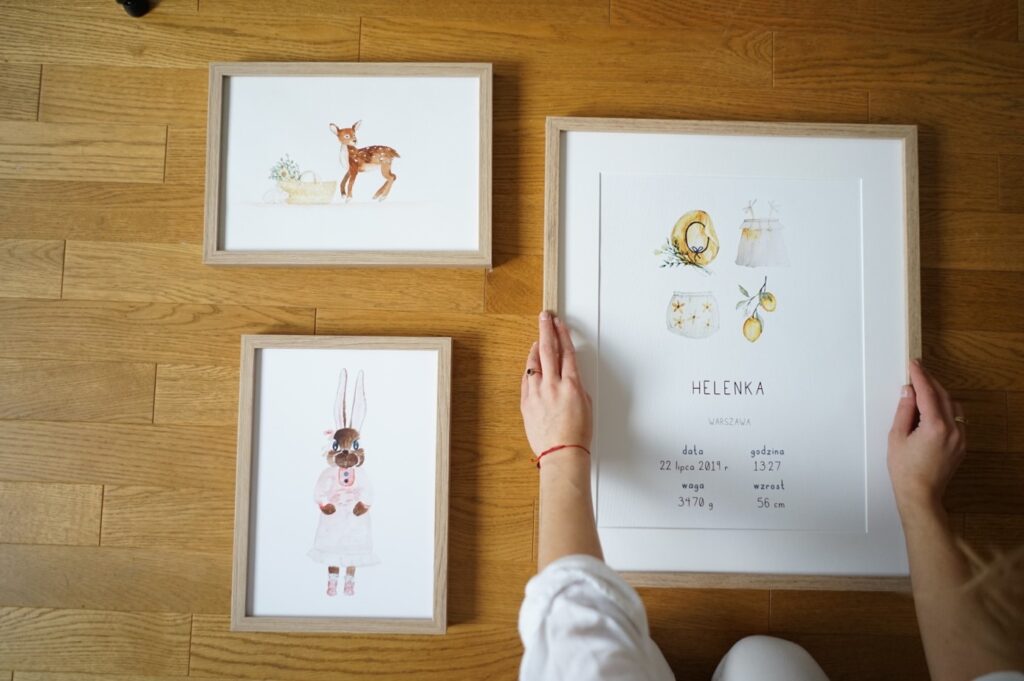
A popular decorative element in a child's room is the so-called gallery wall. It's a composition of wallpaper and pictures hung symmetrically along an axis. The choice of kids' room wallpaper is really wide these days. Wallpapers that fit your chosen base color scheme can feature a variety of fairy-tale motifs. You can match them with colorful pictures and a birth poster for your child in a frame with a passe-partout mat.
Where to find inspiration for kids' room decor?
The internet is a treasure trove of inspiration for kids' room decor. Attractive color combinations and clever tricks for making the most of the space can be found, e.g., on Pinterest. When you create an account there, you can create themed boards, where you save the kids' room designs you like. You can also create a separate folder on your computer. What matters most is being able to open all the photos of the decor items and compare them side by side. This way, you can judge whether they really go together.
Check before you buy
Although searching for inspiration online is most convenient, before buying it's good to see the kids' room decor items in person. A monitor can distort colors, so I recommend visiting brick-and-mortar stores and also ordering samples, e.g., of kids' room wallpaper.
Planning purchases for a child's room
You can design a kids' room for free, but furnishing it puts a strain on the household budget. Does that mean you have to give up on your dream decor? Not necessarily – you can approach it like a professional interior architect. Here's how to plan your budget and create your child's dream room without breaking the bank.
- Set your budget for the child's room.
- Create a so-called dream table, i.e., a list of things to buy.
- Add the prices of the furnishings and compare them with your budget.
- If the price exceeds your budget, highlight the essentials in one color and the items you want most in another.
- Look for cheaper alternatives to the essentials, e.g., on sale or secondhand.
- Mark the items for the child's room that you can buy later, when you have extra budget.
- Add up the costs once more. You may find that you don't have to give up your dream furniture and decor, or that you can keep some of those items.
