



Blog, Guides for you
What Wall Color for a Shared Boy and Girl Room? A Design Compromise for Siblings
Creating a shared room for a boy and a girl is quite a challenge – especially when each of them has their own favorite colors and decor ideas. How do you find a happy medium between pastel pink and deep navy? How do you make the room cohesive, cozy, and calming? Contrary to appearances, choosing the right wall colors isn't just a matter of taste but also of your children's emotions and comfort. Find out which wall color works best for a boy and girl's shared room if you care about harmony and good looks.
Table of contents
How do you reconcile a boy's and a girl's favorite colors in one room?
The simplest way is to create a neutral color base, and only then to build accents on it that reflect each child's personality. A white, beige, or light gray wall becomes a backdrop for accessories – such as textiles, furniture, and decor. This lets you bring in both powdery shades and bolder accents without the risk of color chaos.
What works great are nature-inspired colors – olive, sand, light blue, or warm gray. These shades are easy to combine and don't overwhelm the space. If you're wondering what color to paint a small room for a boy and a girl, go for light, reflective tones – they'll make the room look bigger and lighter.
It's also worth learning the basics of color psychology in a child's room – some colors calm, others energize. Green soothes, blue supports concentration, and yellow boosts creativity. By choosing them consciously, you create a space where both children feel good.
Neutral, calming colors – the best color base for a shared sibling room
Colors for a shared teen room for siblings should be versatile and easy on the senses. Beiges, light grays, soft blues, or sandy shades are a safe base that's easy to liven up with accessories. Tones like these aren't overstimulating, so they're perfect for a space for studying and resting.
If you want a room that “grows” with your children, go for durable, timeless solutions. Choose natural paints or wallpapers with delicate patterns that won't go out of style after a year. A great idea is luxury kids' wallpaper – it not only looks beautiful but also creates a friendly atmosphere.
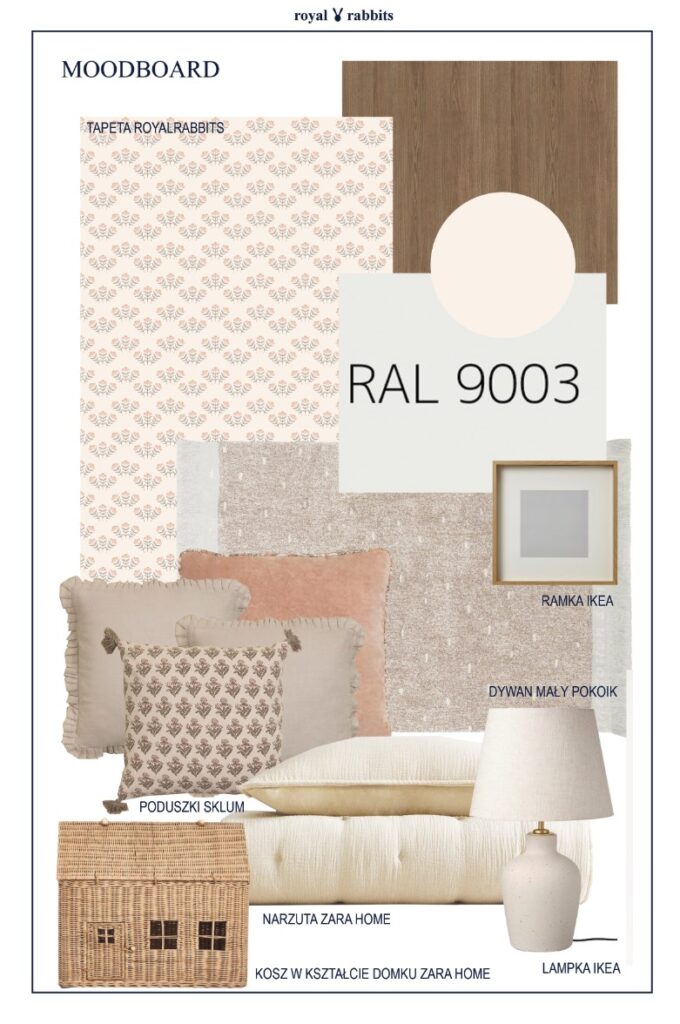
A sample neutral color palette for a shared room:
- Off-white – visually enlarges the space and suits any style.
- Warm beige or light caramel – adds coziness.
- Mint or pastel blue – calms and refreshes.
- Sandy gray – elegant yet very natural.
A base like this makes it easy to change the room's mood with textiles, lighting, and accessories – without having to repaint the walls.
How do you liven up the room? Trendy kids' room wall colors to use in moderation
Trendy kids' room wall colors today go beyond classic blue and pink. Trends include terracotta shades, muted green, dusty pink, and mustard yellow – colors inspired by nature and the earth. They work beautifully with a neutral backdrop, bringing coziness and character to the room.
Remember, though, not to overdo intense colors. They're stimulating, so it's best to limit them to one wall or section – for example, behind the bed or desk. This adds depth to the room without tiring the eyes.
If you're wondering which wall color to choose for a boy and girl's room, consider subtle contrasts: blue and pink broken up with gray, muted green with beige, or warm brown with ecru. These combinations create a friendly, calm atmosphere without colors competing.
You'll find more inspiration in our guide “How to design a room for a boy and a girl“ – it offers practical tips on how to harmoniously combine different zones in one room.
Which motifs or wallpapers suit a shared sibling room?
Nature, animal, space, or plant motifs are a safe choice – they're neutral and appeal to both boys and girls. The shared space can also gain individual character through decor assigned to each child's zone – for example, a framed poster for a kids' room above the desk or wallpaper with a motif each of them loves.
Another good way to create a harmonious effect is dividing the space by color – for example, one part in cool shades (e.g., blue, mint) and the other in warmer ones (e.g., beige, dusty pink). This way, each child gets “their own” space, and the room still looks cohesive.
If you're furnishing a small space, be sure to check out our guide “How to furnish a small kids' room“ – it has practical ideas for making the most of every inch.
Recommended accessories for a shared sibling room
-

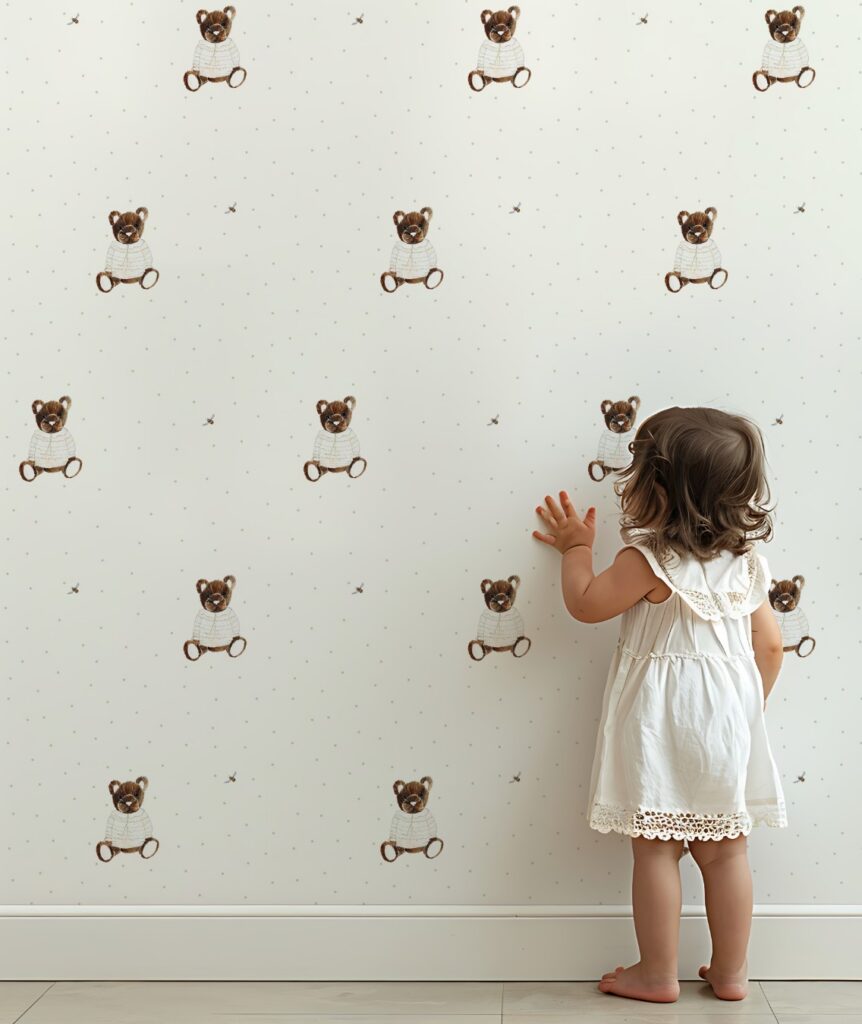
Alinka the Teddy Bear and Bees Wallpaper
Od: 21,99 $ -

Beige Safari Wall Mural
Od: 28,99 $ -

Birds and Stripes Wallpaper
Od: 21,99 $


When designing a sibling room, especially in small apartments, keep these rules in mind:
- Light walls and furniture visually enlarge the space.
- Uniform flooring and a rug create cohesion.
- Symmetry (e.g., two beds placed parallel) visually organizes the space.
- Wallpaper or artwork above the beds creates a cozy focal point.
When designing a shared room for siblings, you don't have to choose between a “boyish” and a “girly” style. The key is balance between colors, emotions, and functionality. Well-chosen colors, natural materials, and subtle patterns will help each child find their place here – along with calm and inspiration.
