



Blog, About styles, Boy's room, Girl's room, Guides for you
How to create a minimalist kids' room – minimalism doesn't have to be boring!
Creating a space for a little one is a challenge that often ends in too many stimuli and colors. Minimalism doesn't mean giving up coziness or childhood joy – quite the opposite, it lets you showcase what matters most. A well-planned room gives your child a place to calm down, recharge and play creatively. You'll find that fewer things around means more room for imagination and free development. This approach lets you focus on nurturing your child's natural curiosity instead of accumulating things you don't need.
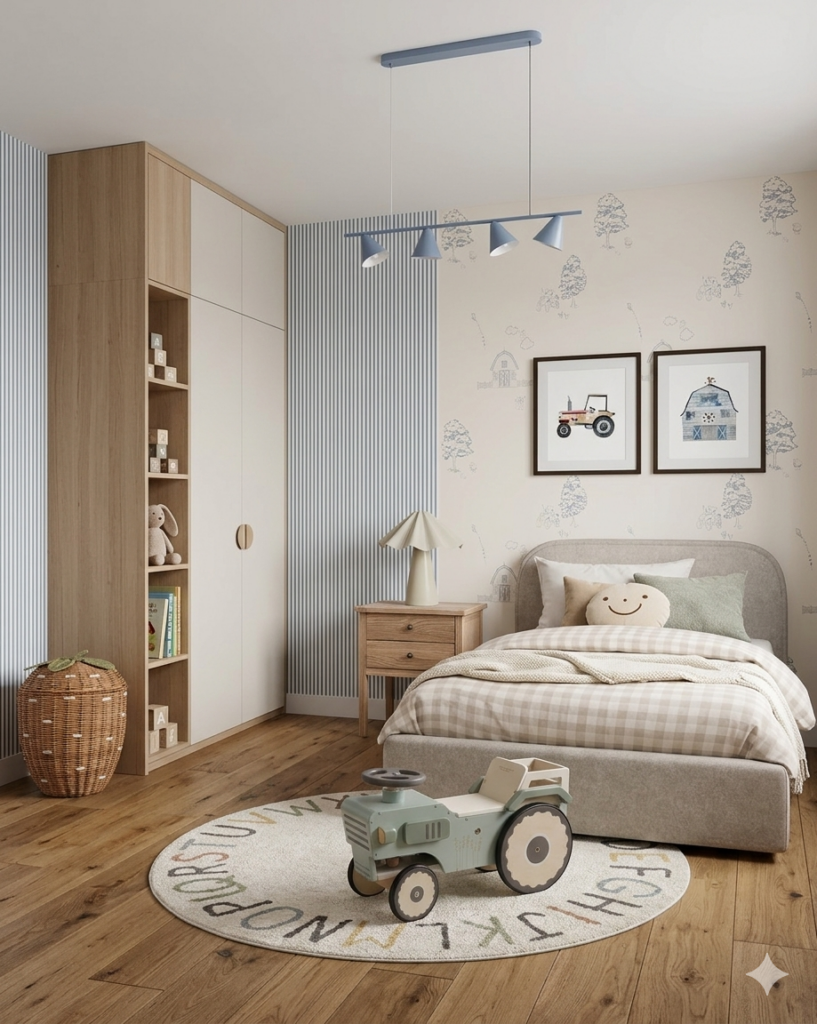
Minimalist kids' room design at a glance
- Minimalism in a kids' room effectively eliminates visual chaos, which leads to better concentration and calmer sleep. Having fewer things around also encourages imagination and creative play.
- The design should be built on a light color palette of whites, grays and soft beiges. Natural wood is the perfect complement to this base.
- Choose accessories on the principle of quality over quantity, so your child isn't overwhelmed by too many decorations. Go for one striking accent, such as a subtle geometric wallpaper or a personalized birth poster.
- High-quality, functional furniture lets you create a space that grows with your child without frequent changes. Colorful accents are best introduced through textiles that are easy to swap.
Why is a minimalist kids' room a great choice?
Going this route lets you create a harmonious environment that grows with your little one without constant, costly changes. A minimalist kids' room eliminates visual chaos, which directly leads to better concentration and calmer sleep. You'll quickly see that minimalist style isn't just about looks – above all, it's about functionality tailored to your family's everyday needs. The space becomes clearer, and tidying up toys takes much less time, which you'll certainly appreciate after a busy day. A room like this teaches your child order and respect for their belongings, encouraging a mindful approach to the world from an early age.
The color palette – the foundation of a minimalist room
When deciding which colors to choose for a minimalist kids' room, go for earth tones, soft beiges and classic whites and grays. These colors make an excellent base that visually enlarges the room and gives it a special lightness. When you go for the aesthetic style, you can be sure the room will look modern and tidy for a very long time. Light walls reflect natural light beautifully, so a minimalist kids' room feels bright and full of positive energy. You can complete this base with natural wood, which warms things up and adds a cozy touch that's perfect for a child's kingdom.
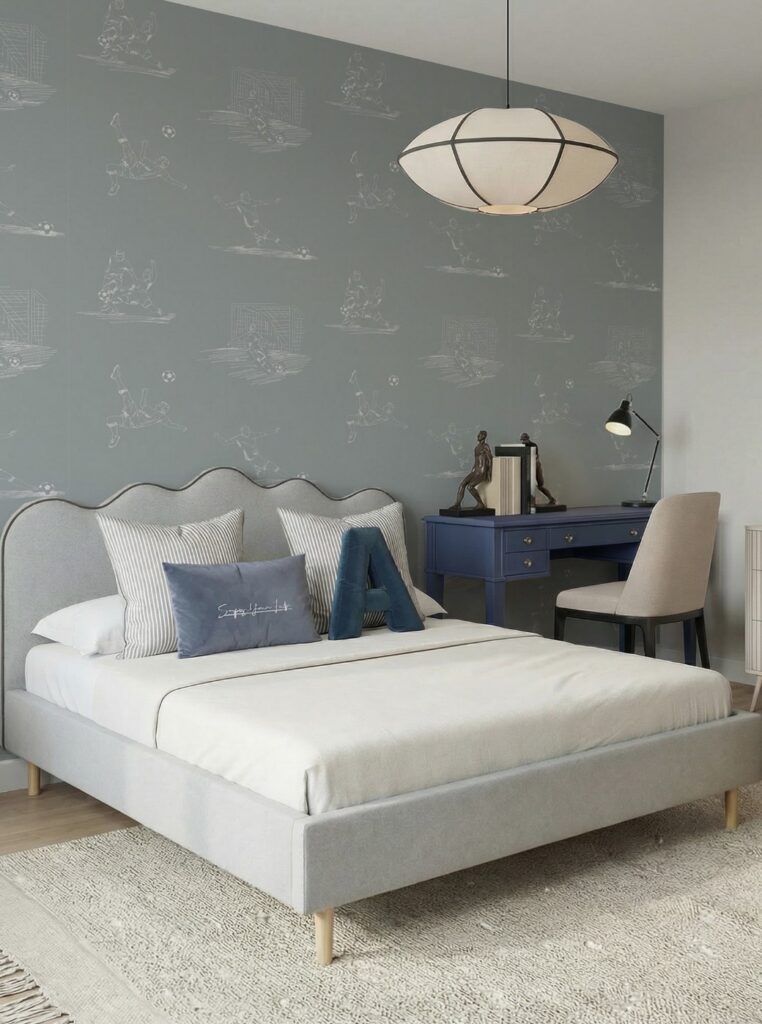
“Less is more” walls – how do you choose minimalist decor for kids wisely?
Choose wall accessories on the principle of quality over quantity, so the room's little resident isn't overwhelmed. Minimalist kids' room decor usually means simple shapes with some emotional or educational value. Instead of lots of small ornaments, choose one or two striking pieces that draw the eye in an attractive way. Remember that every decoration should work with the rest of the furnishings to create a cohesive, logical whole. That way, you'll strike the perfect balance between aesthetics and a child's need to explore the world.
Subtly patterned wallpaper – an accent that doesn't overwhelm
If you're wondering which wallpaper for a minimalist kids' room will work best, go for geometric patterns or delicate botanical motifs. With minimalist wallpaper, you can create a striking accent wall that won't overpower the whole room. Such kids' room wallpapers add depth while remaining a backdrop for your child's everyday adventures. Look for products with a matte finish, which look very elegant and are exceptionally easy to keep clean. Subtle dots, lines and stars are motifs that never go out of style and suit every stage of growing up.
Subtly patterned kids' room wallpaper
-

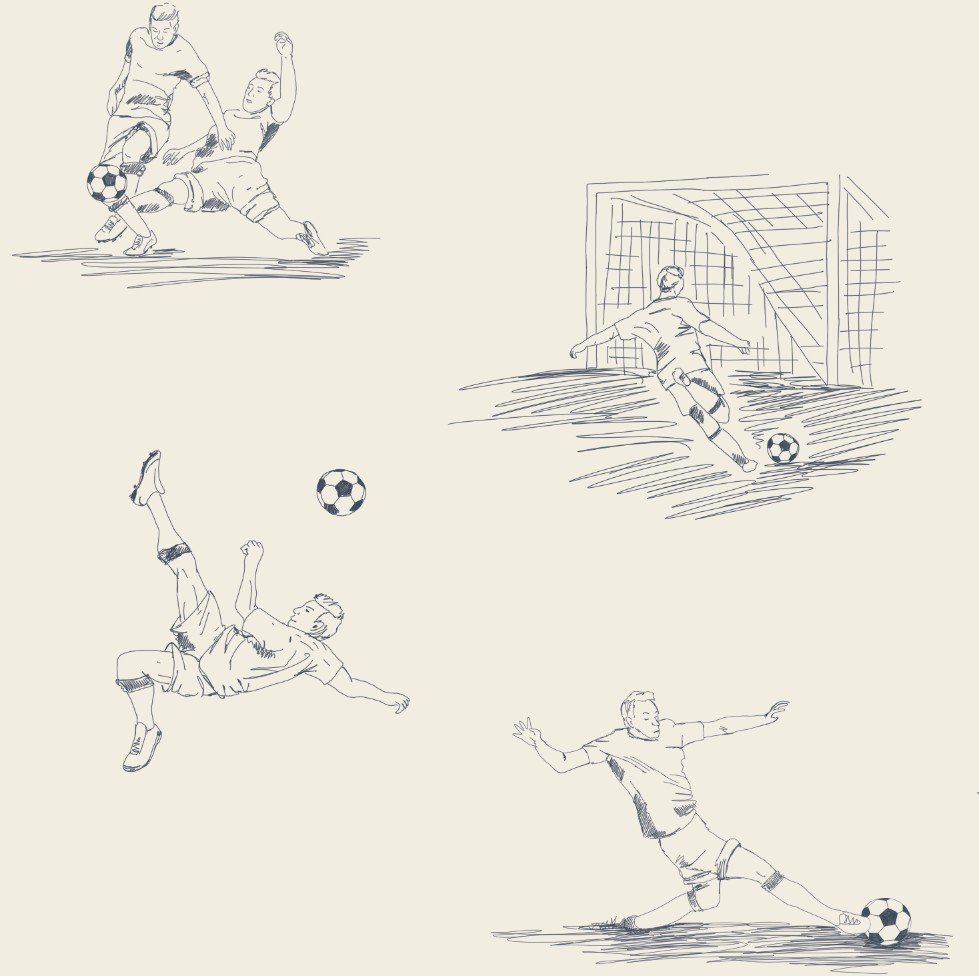
Beige Line Art Soccer Wallpaper
Od: 21,99 $ -

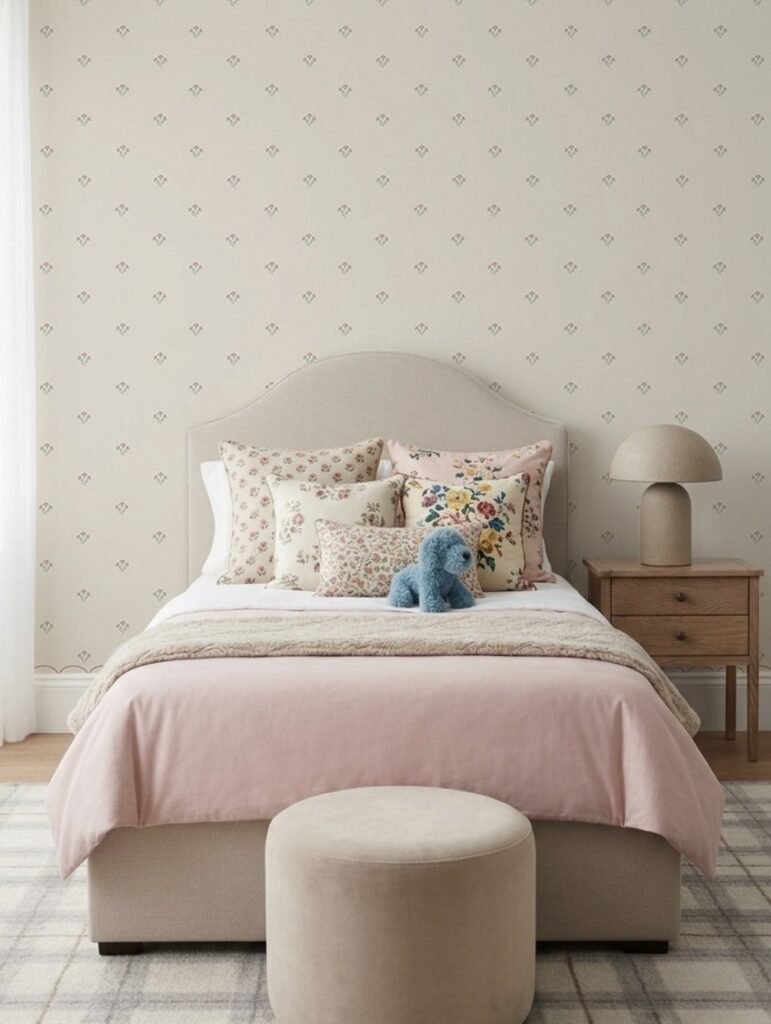
Floral Wallpaper – Rosy Peonies
Od: 21,99 $ -

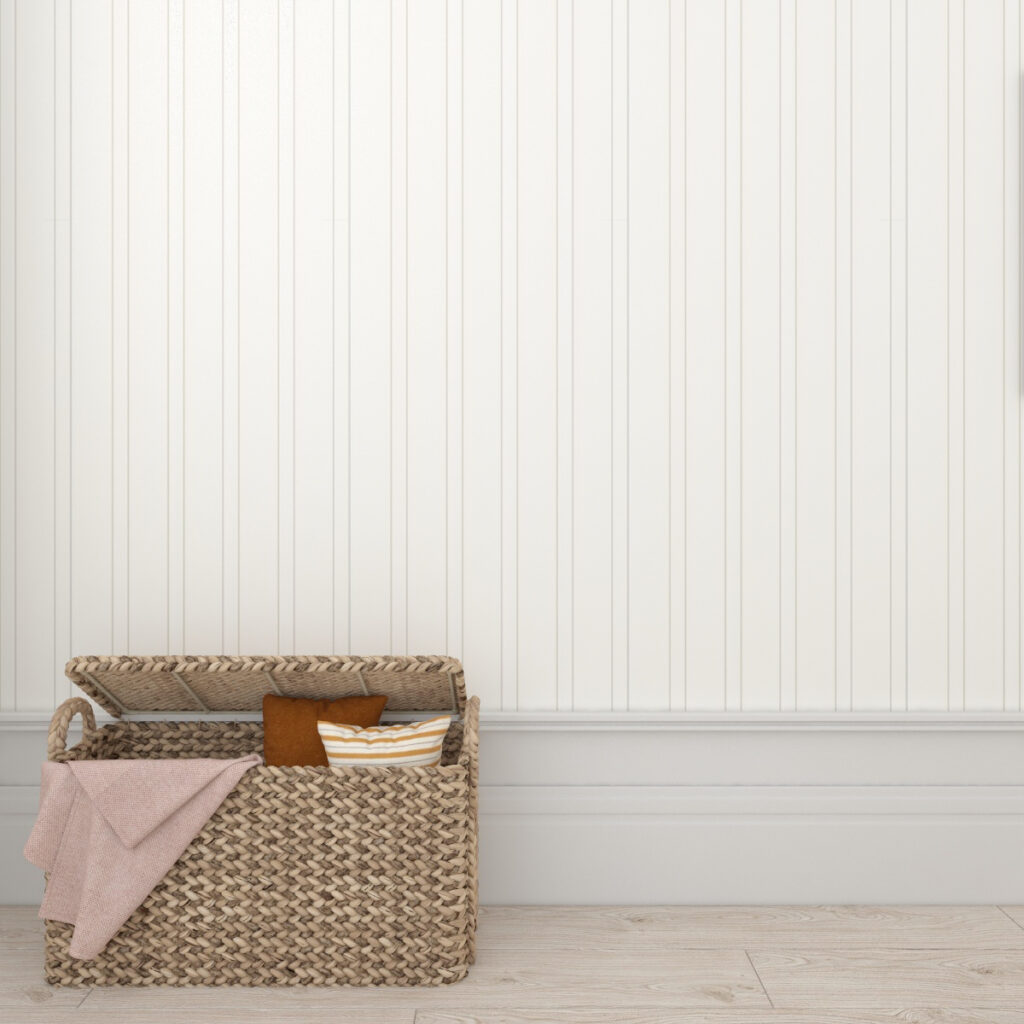
Beige Stripes Wallpaper
Od: 21,99 $ -

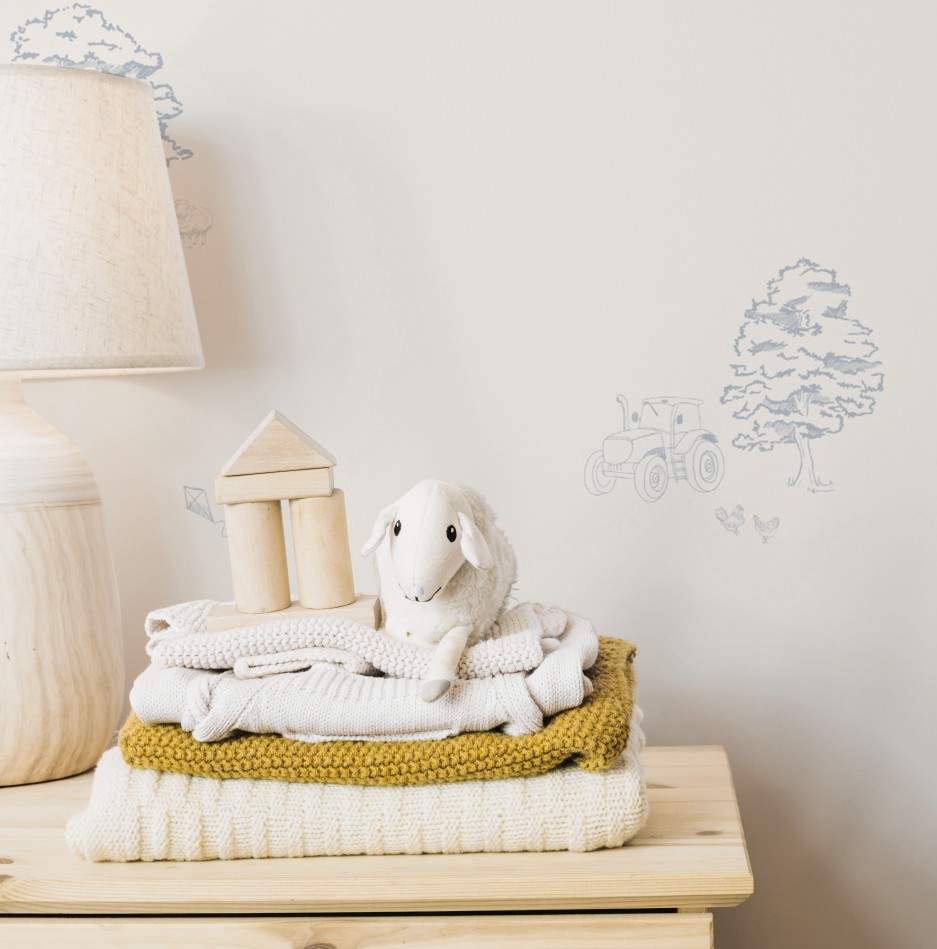
Light Blue Farm on a Light Background Wallpaper
Od: 28,99 $
Prints and birth posters as a personal finishing touch
You can personalize the space even while sticking to strict rules of simple forms and no unnecessary ornaments. Initial posters or delicate birth posters in simple frames are a great way to give the room a unique touch without adding clutter. Details like these make the room feel personal, so your child feels safe and truly at home. Hang them above the crib or desk to create a corner for reflection, learning and winding down every day. Choose prints in muted colors that flow naturally with the palette you've already chosen for the walls and furniture.
Hand-painted birth posters and prints for kids' rooms
-

Tuscan Birth Poster
Od: 28,99 $ -

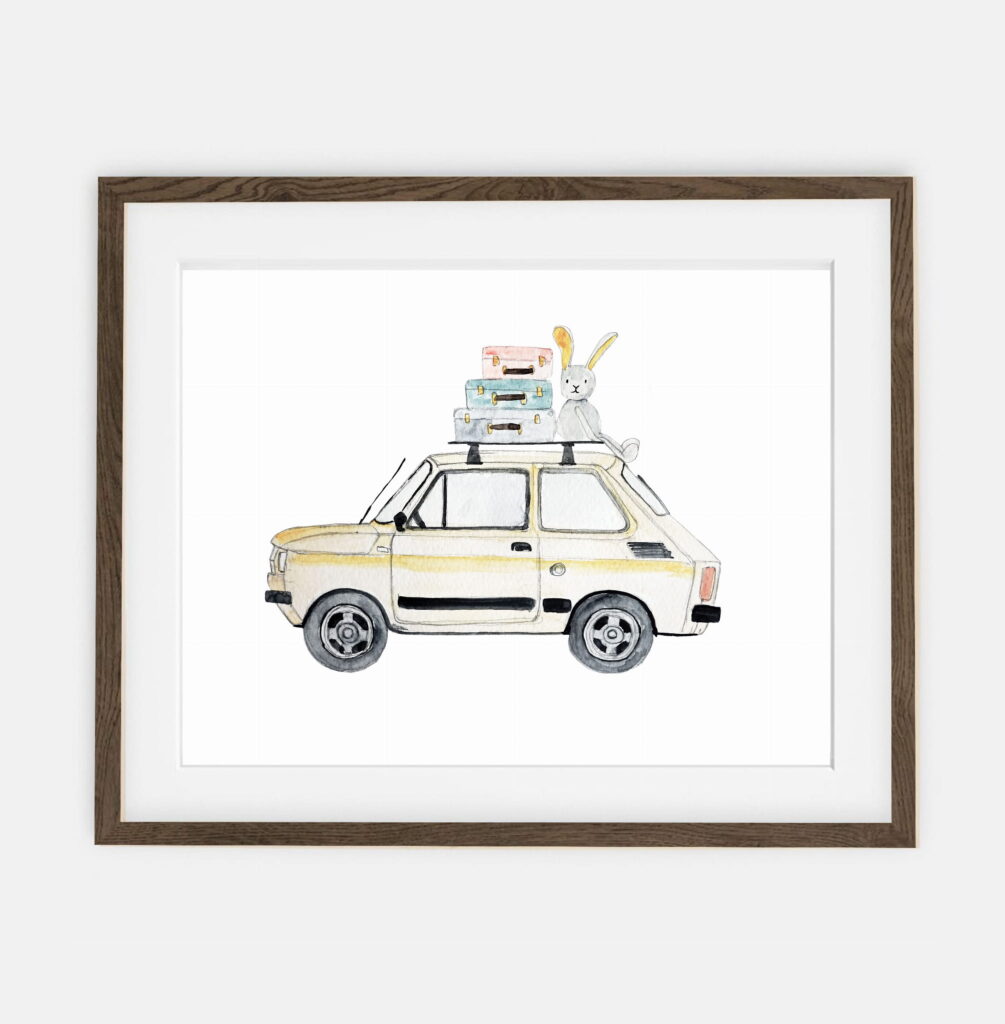
Fiat 125 P Car Poster
Od: 25,99 $ -

Schoolgirl Mouse Poster
Od: 25,99 $ -
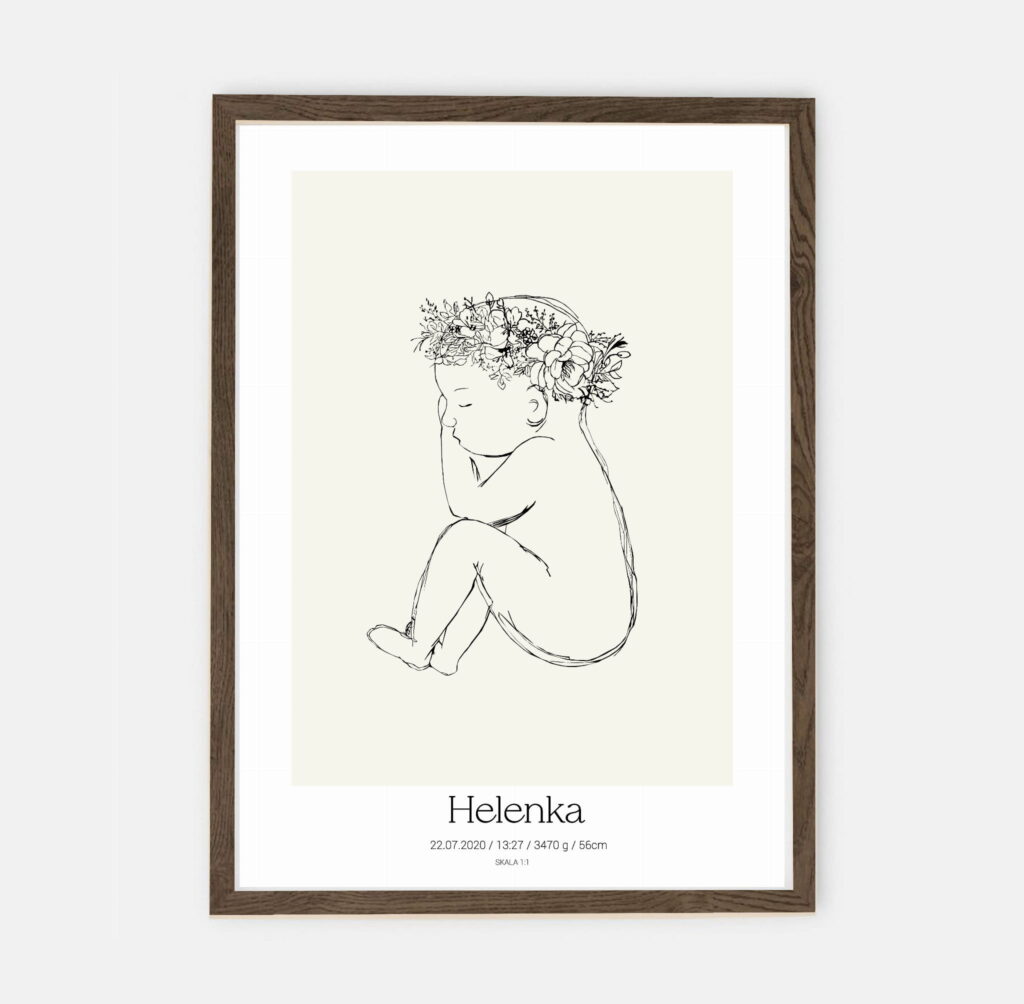
Helenka Life-Size 1:1 Birth Poster
Od: 38,99 $


Scandinavian wallpaper at the heart of the design! Discover the secret to a minimalist kids' room
Bringing in Nordic-inspired motifs is a proven way to warm up a room while keeping it simple and orderly. Scandinavian-style wallpapers are often based on light colors and nature-inspired motifs, which fits perfectly with minimalism in a kids' room.
When planning a design like this, keep these steps in mind:
- Choose one main wall for the pattern, so you don't overwhelm a small space with too many graphics.
- Pick a motif that matches your child's interests – for a little explorer, the perfect choice is boy's room wallpaper with mountains or woodland animals.
- For a little lady, go for subtle girls' wallpaper with delicate flowers, polka dots or clouds.
- Surround the wallpaper with natural materials, such as linen curtains or soft cotton rugs.
- Keep furniture to the bare minimum, focusing on high quality and multifunctionality.
A layout like this turns the room into a haven full of light, calm and good style. Well-chosen wallpaper can work wonders, giving the room character without the need for lots of unnecessary knick-knacks.
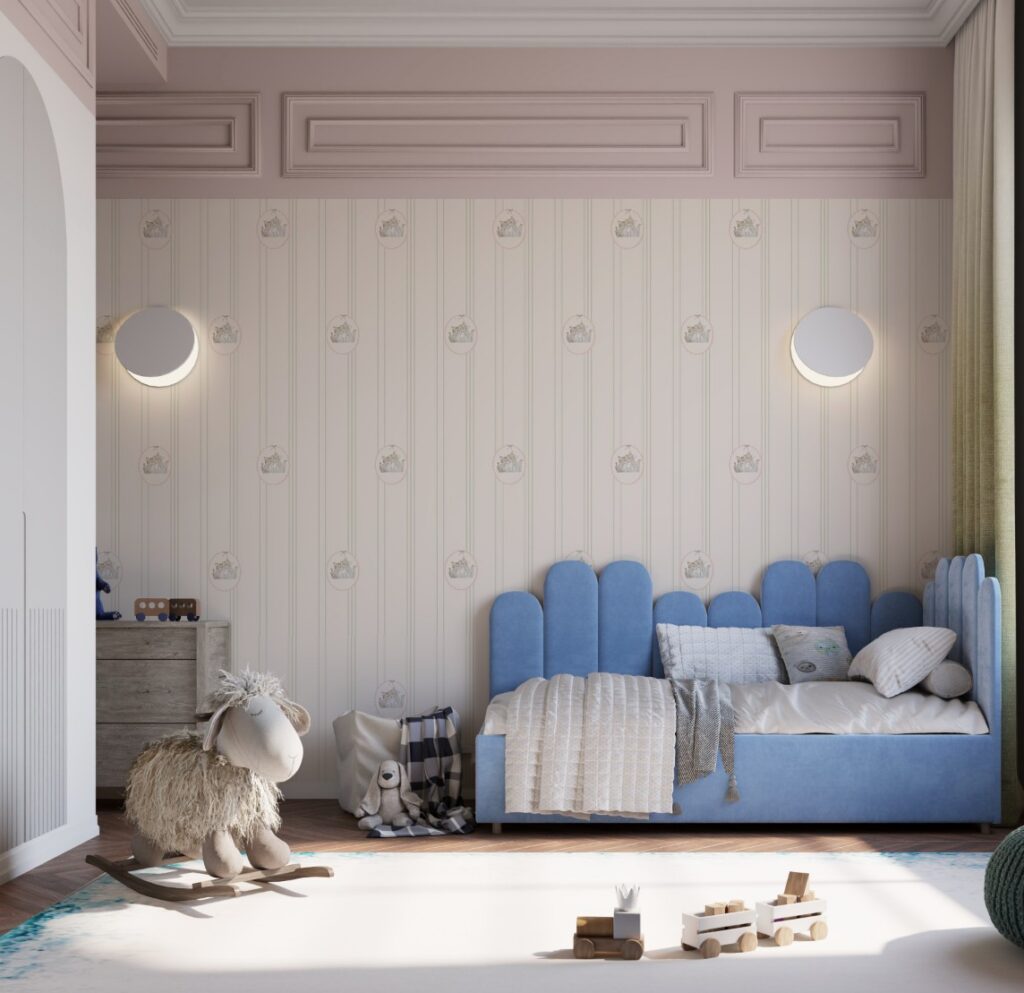
Minimalism in a kids' room – how to sneak color into a Scandinavian interior
In a pared-back room, color should come from carefully chosen textiles, toys and subtle wall decor. You might choose rustic wallpapers, which bring in shades of sage, dusty pink or mustard in a very natural, understated way. It's important that the colors you choose are muted and work with the base, so your home doesn't look visually overloaded. Color can appear on pillows, a bedspread or wooden blocks arranged on an open shelf. This approach keeps the room cohesive while adding a cheerful, childlike touch that sparks your little one's creativity.
Designing a room in the spirit of minimalism is a beautiful journey toward simplicity that benefits both you and your child. By choosing muted colors, high-quality decor and functional furniture, you create a space that supports harmonious development.
FAQ – frequently asked questions about minimalist kids' rooms
1. Which wall colors should you choose for a minimalist kids' room?
Choose light, muted colors such as white, beige, gray or pastel shades of sage and light blue, which help your child calm down. Avoid bright colors, especially red. Also go for practical, washable paints with a matte finish.
2. How do you combine Montessori and minimalism in a kids' room?
Combining Montessori with minimalism is based on the “less is more” principle, which supports your child's independence. Go for low, open furniture and a limited number of toys that you rotate regularly. Choose natural materials and divide the room into clear zones – for sleeping, playing and getting dressed.
3. How can you store toys cleverly in a minimalist room?
Go for multifunctional furniture, such as beds with drawers and closed cabinets that hide excess items. The key is to rotate toys regularly, leaving only a few out at a time.
